Author: Tanushree Udawat

  • Does Running Google Ads Help Improve SEO Rankings? A Detailed Insight

    Does Running Google Ads Help Improve SEO Rankings? A Detailed Insight

    You might have always thought that spending on Google ads won’t do much good to your Search Engine Optimization endeavors. But, Google has always been very clear about its ranking policies. The content, page experience, and dwelling time of the users on the web pages are some of the primary factors they consider. Consequently, paying for the ads won’t simply bring you to the top of SERP. 

    You might be thinking about why it’s always recommended to implement an omnichannel strategy comprising paid ads to generate relevant search traffic. This leads to the question – does running Google ads help improve SEO rankings? 

    Though Ads don’t directly boost the SERP Rankings, it helps drive targeted search traffic, eventually boosting rankings. In this blog, we’ll discuss how investing in Google Ads can increase the effectiveness of SEO.

    What are Google Ads? 

    Before jumping into the correlation between Search Engine Optimization and paid advertising campaigns on Google, let us first understand how PPC and SEO work. Google Ads or PPCs is Google’s advertisement solution that allows businesses and website owners to show their ads next to Google’s search results when the query matches the content or theme of your ad. Here you don’t need to pay in advance and are only required to pay a particular price every time a client clicks on your ad to call your business or visit your website. 

    Search Engine Optimization or SEO is the process of making your website fit to be ranked by Google on the Search Engine Results Page or SERP. This includes optimizing the contents of the web pages, proper usage of keywords, and deriving links from high-authority websites. Whenever someone searches for a service or product that matches your website’s content, it’ll appear on the results page if it’s well optimized. 

    Google’s algorithm judges your website based on these factors to analyze its relevance, and the more relevant it is, the more Google will push it to the top.  So, it’s integral that your website is well-curated, easily understandable, and descriptive for the audience to connect with it easily. Adding complicated stuff or content that’s already available on other websites will not do any good as visitors are less likely to trust a new website. 

    Why Does Google Not Allow Ads to Help Improve Rankings?

    Whether PPCs impact the rankings is one of the most debatable questions in the digital marketing community. While Google has officially declared that the Google ads do not affect the SEO rankings and these two are entirely separate entities, marketers often get confused about whether they are interlinked. 

    Before Google Ads or Google AdWords (as it was known formerly) was launched in 2000, the only strategy to rank on the SERP was to create quality content. As Google ads started gaining popularity as a medium to advertise the product(s) and service(s) on SERP, marketers started questioning if Google would now begin giving priority to businesses paying them through ads. After all, if Google did do it, imagine what the scenario would have been like. Instead of putting effort into ensuring their websites are up to the mark, they would bid for top positions by paying more for the Ads. 

    This would have been detrimental to the organic ecosystem Google always has been trying to build and takes pride in. Consequently, content would have had to take the back seat then. It would have also led to legal issues for violating several laws like EU competition laws and US antitrust laws. 

    How to use Google Ads to optimize SEO?

    SEO has its fair share of troubles. First and foremost, SEO takes time. It might take months, if not years, to achieve the desired results. You need to have patience for your SEO plan to start showing the desired results. While a Google Ad can be set up within a single day, spending a minimum amount and it may start showing results in no time. These insights help a lot in the long run by providing a better idea of what needs to be done for more successful conversions. For example, suppose your insights showed that email sign-ups and purchases are more successful in ensuring conversions; you or your SEO manager can add these to your SEO strategy.

    Google Ads is also an excellent tool for retargeting. Retargeting or remarketing is the process of showing targeted ads only to the audience that had earlier interacted with your site but have not converted to successful leads despite triggering some kind of action. 

    You can make them interact with your brand again through these targeted ads leading to conversion. Google’s algorithm takes into consideration the spike in traffic and marks it as relevant. As a result, it starts promoting your website and pushes it to the top. 

    Remarketing also helps you find out which keywords are most effective in attracting clients and based on that data you can start incorporating those keywords in your website while doing SEO of the site.

    Lastly, using Google Ads, you can keep a constant check on the result of the SEO campaign. Using that data from the ads, you can change your SEO strategy and make it more efficient. For example, if you’re making changes to your website, the Ad tools can help you determine if the modifications can bring in more traffic or will not have any result.

    Conclusion

    We hope you now have a better idea about SEO and Google Ads and ways to leverage one to optimize the other. So even though Google Ads will not directly help your SEO campaign for rankings, it will save your time and resources instead of you having to wait and invest for months on an SEO campaign only to find it didn’t work the way you wanted to in the first place. 
  • Top 3 Digital Marketing Trends in 2021 that You Must be Aware of

    Top 3 Digital Marketing Trends in 2021 that You Must be Aware of

    Digital marketing is changing the entire marketing landscape altogether.  Quite evidently, it’s constantly evolving. It’s, therefore, essential for businesses to keep abreast with the latest trends and abide by an approach that’ll help them take the lead. 

    As technology continues to evolve, it has become essential for marketers to improvise and leverage the full potential of current trends to stay ahead of the curve.  For example, voice search optimization and artificial intelligence are now taking the lead when it comes to building a brand online. This blog aims to compile the list of three digital marketing trends you need to follow in 2021 to up your game:

    1. Artificial Intelligence in Marketing

    Artificial intelligence is no longer the cool tech from Hollywood movies. It has slowly started becoming a part of our daily lives.  Marketers all over the world are now reaping its benefits to promote their products across all digital platforms. As per data, almost 60 percent of internet users now actively interact with AI-powered chatbots to understand the product(s)/ service(s) or seek answers to their queries. Not only that but the digital content we consume these days are also curated according to the data gathered by AI algorithms. 

    The best thing about Artificial Intelligence is, it’s a self-learner. This means the algorithm can learn from the internet by itself without needing any extra help. Artificial intelligence is also providing marketers with better options to ensure more success. JP Morgan and Chase recently created history by using its AI-powered contest writing assistant Persuade to write an ad copy.

    1. Augmented Reality

    Augmented Reality is now among the most popular trends in digital marketing. In fact, it has been making its presence known for quite some time now. Unlike virtual reality, AR has its roots in the real world. It takes objects from the living world and enhances the experience we may have interacting with them through computer-generated perceptual information.

    Several brands are already using AR features to make the experience of their customers better and increase sales. Eyewear brand Lenskart uses an AR system to enhance the customer experience during shopping by letting them test the products before finalizing the order. 

    Brands like Ikea and Gucci are also not far behind. While Ikea lets the customers check out the furniture from IKEA that would match the aesthetic of their rooms simply by clicking a photo of their room and uploading it to their app, Gucci is also garnering popularity among the customers for their use of AR.  Gucci lets anyone try out the sneakers they sell simply by pointing the camera down toward the user’s feet. Users can also take photos and share them with others on various social platforms.

    This shows the popularity AR is garnering among businesses, and it is safe to assume that it would play a significant role in benefiting digital marketers in the upcoming days.

    1. Voice Search Optimization.

    Phrases like “Okay Google” and “Hey Siri” are now a part of our daily conversations. Whether searching for a new place to eat or looking up an address on the map, users can do anything by simply saying the query on the phone instead of manually typing these. Though Voice Search has existed since 2014, it has gone through several changes over these years, and thus today, it has a more streamlined structure with better features. Google has also recently announced that its Voice Search tool today boasts around 96% accuracy. 

    Ecommerce brands like Amazon, Flipkart, etc., have already incorporated voice search options on their sites. According to the latest studies, experts predict that more than 50% of online shopping in the future will be done through voice search only. Thus it will have a significant impact on the digital marketing space. Marketers need to become acquainted with how Voice Search Optimization can be used to drive higher search traffic and ultimately increase sales and revenue.

    Conclusion

    Technology is expected to play a key role in digital marketing. So, it’s integral for marketers to keep abreast with the latest trends and changes in the digital marketing space to drive tangible results. The key is to always be on the lookout for changes and craft strategies to stay relevant in this cut-throat competition. 

  • What Will the iOS 14 Update Mean for Facebook Advertisers?

    What Will the iOS 14 Update Mean for Facebook Advertisers?

    Apple has always walked the extra mile in ensuring the privacy of its users. If your prospects are mostly iPhone users, it’s time you think of altering your strategies considering the new Apple privacy updates. This post aims to shed light on why the iOS 14 update will matter to your marketing team and how it’ll affect your Facebook marketing endeavors. 

    What Does the iOS 14 Update Matter to Marketers? 

    There has been a lot of fuss among customers about Apple’s upcoming iOS 14 updates. While users will remain at better off in terms of privacy, it has taken a toll on marketers. It’s significantly impacting data tracking permissions and, therefore, considerably impacting the efficacy of Facebook ads. 

    Facebook, too has responded to the planned update with equal apprehension as that of the marketers. Businesses these days use Facebook ads as one of their key strategies for audience targeting and lead generation. 

    The iOS 14 update’s most significant changes are its privacy and data sharing policies, which the company has termed as Apple’s App Tracking Transparency Framework. The idea is to give users a transparent choice to protect the privacy of the customers. 

    Currently, any user willing to turn off the data sharing on your phone can go to the privacy settings option and switch off the function. The iOS 14 update will prompt the users to decide anytime they wish to download the app. 

    To put it simply, the moment you download the app from the App Store, you’ll see a pop-up asking if you want to grant the app permission to track your activity across apps and websites of the other companies. You can either allow tracking or refuse the app to do so. 

    Marketers believe that if consumers are given a choice if they’d like to be tracked across the internet, most of them will respond negatively. On the flip side, Facebook measures the efficacy of the ad campaigns by analyzing the user behavior data. 

    The iOS 14 update will be applicable to all apps in the App Store, including Facebook-owned apps like Messenger, Instagram, and WhatsApp. Additionally, it’ll also impact the apps that use Facebook’s Audience Network for monetization. There’s no denying that this would significantly impact businesses that rely on social media advertising. 

    In its official statement, 

    Facebook revealed that this update would cause significant damage to small business owners who are trying to survive the challenges posed by COVID.  Facebook has even created a page for small businesses to share how Apple’s update will affect them as well as the hashtag #StandUpforSmallBusinesses.

    How Will the Update Affect Marketers?

    Facebook can now easily track user activity on other websites and in other apps. The most common way is to track through Facebook Pixels (small pieces of Java Script codes) installed on a website or app. When any user visits a website and takes action (adds an item to their cart, makes a purchase, visits a landing page, etc.), the codes notify Facebook, where that information is stored as data for your campaigns. 

    Marketers can easily use the information gathered from Pixels and other tracking methods to determine the ads that will best work for your business goals by dissecting the insights provided by Pixel. It also allows marketers to retarget specific groups of users, such as website visitors who added items to their cart but ultimately didn’t make the purchase. 

    Currently, you can add as many pixels as you want on your website for as many marketing campaigns you like. Usually, it’s wise to add pixels on every website page to track all the conversions. With the iOS 14 update, marketers are allowed to place only eight pixels on a single domain. This will significantly reduce the amount of data that it collect and leverages. 

    If Facebook cannot track user behavior, its targeting ability will significantly diminish, and the amount of data collected will be considerably reduced. The amount of money spent on ads will have lower ROI and will also become expensive. Moreover, marketers often use this data to curate customized ads which could pose great difficulty. 

    Ultimately, the ads will be less personalized, which could lead to fewer leads being generated by Facebook ads to drive sales. The reporting is also likely to get impacted by the update, as the data won’t include users who denied permissions for tracking. 

    The Facebook Audience Network is a tool meant for publishers to monetize their websites by hosting ads and for advertisers to make money from the ad placement. iOS users who deny permissions can’t be tracked on these websites, and advertisers, therefore, may decide that paying to host their ads on these sites will no longer be profitable. They’ll end up losing valuable ad placements, and publishers will lose revenue from those ads. 

    Conclusion

    The iOS 14 update has concerned marketers globally about their future ability to reach out to customers, generate leads, and measure conversions from Facebook ads. However, the complete impact will be known when the rollout is complete. 

    As a rule of thumb, it’d be a good idea to start looking for ways to reach out to the prospects digitally. Though Facebook is the most significant player,  it’s high time you start looking for options. 

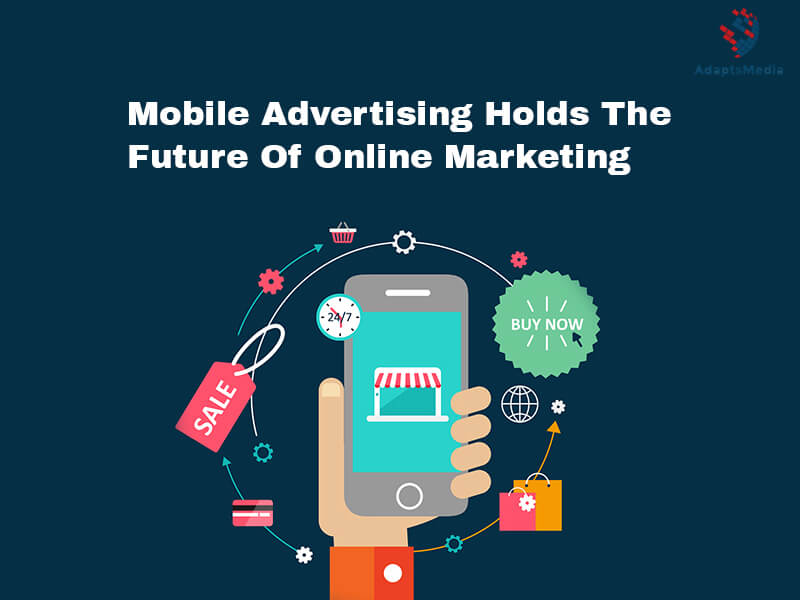
  • Is Mobile Advertising The Future of Online Marketing?

    Is Mobile Advertising The Future of Online Marketing?

    Mobile marketing is now an integral advertising solution. In 2019, around 5.11 billion global users reportedly had unique mobile devices. Out of those, approximately 3 billion had smartphones. 

    As per data, people now spend more time on their smartphones and mobile devices compared to traditional digital devices like televisions. Moreover, an in-home eye-tracking study from Facebook revealed that in the United States, around 95 percent use their smartphone while watching TV. 

    The Age of Mobile Marketing 

    The ultimate goal of a marketing campaign is to reach potential customers over platforms that they are more likely to use. Multi-national companies and large corporations are investing a sizeable chunk of their budget into mobile advertising. You must’ve come across some of them yourself in the form of pop-ups, push notifications, banners, and other forms of advertisement over mobile websites. 

    With the global audience making a gradual transition to mobile platforms over laptops, desktops, and TVs, organizations are investing only in mobile-only marketing campaigns. And the best part – they are getting handsome returns. 

    Why Mobile Advertising is the Present and the Future?

    Digital marketing is ever-changing. This makes it difficult for companies to rely on predictions. However, mobile marketing is the safest option for short-term as well as long-term gains. Here’s why:

    1. Smartphone Screen-Time is Increasing

    The amount of time that consumers spend on mobile phones is on a steady rise. Mobile screen-time accounts for about 71% of the total digital time spent by consumers. 

    Several reports suggest that adults and teenagers in the United States spend more time with their smartphones than traditional digital platforms. All this is an indication of what’s to come – a digital world with smartphones at its center. 

    2. Mobile Advertisements are on the Rise:

    With digitization, mobile advertisements have surpassed other forms of marketing to become the primary form of digital advertisements. It’s projected that mobile advertisements will account for over 50% of digital marketers’ total spend on ads. 

    3. Mobile Marketing is Cost-Effective

    Marketers would always factor in the budget spend required to get tangible returns from a marketing campaign. 

    Mobile advertisements generally have a CPV (Cost per Visit) system. The company is free from making risky predictions and only pay when they get an in-store visit through the advertisement. 

    4. Unique Device IDs Help Companies Understand Customers Better:

    Another benefit of mobile marketing is the information that companies can acquire through a user’s accumulated data. Target-based advertisement is more likely to help businesses reach potential customers than any other form of advertisement. With television, laptops, and personal computers, a customer’s digital footprint is not enough for companies to prepare a tangible profile. 

    Every smartphone has a unique device ID that remains with the user at all times. It helps advertisers track user activity and also try to find out about their preferences and needs through location services. All these make mobile marketing the most viable option in terms of target-based advertising. 

    Types of Mobile Advertisements

    To experience optimized results from mobile marketing, companies need to implement the right kind of strategies that align with the present and future (predictive) trends. 

    For example, customers tend to like engaging with QR codes in public, and companies are taking advantage of it by installing their QR codes in easily accessible locations. 

    1. App-Based Advertisements – Users mostly like using apps they are connected to. With new apps being introduced at every corner, the numbers will only go up. App-based advertisements, therefore, are the most common form of mobile ads. Applications like Google AdMob help advertisers post their advertisements on third-party mobile apps without any additional requirement. 

    2. In-Game Advertisements: If you are fond of mobile games, the chances are that you must have encountered in-game advertisements. Nearly all the games on smartphones have advertisements. These ads appear between different stages of the game to not disturb the user’s experience. 

    3. QR Codes: Users love scanning QR codes. There is a certain mystery factor attached to QR codes that entice customers, as they are unable to guess where they’ll be redirected. As such, QR codes are one of the most popular forms of mobile marketing out there. 

    4. Location-Based: These advertisements pop up on a user’s mobile screen based on their location activity. The goal is to decipher user’s interests and desires to give them fitting advertisements. 

    There are many other common forms of mobile advertisements as well, like mobile search ads, mobile image ads, and SMS advertisements. But the ones mentioned above cater to the future trends while producing handsome returns in real-time as well. 

    Conclusion

    The best way to decide as a marketer is to think like a customer. So ask yourself this simple question – how much time have you spent on your smartphone today as compared to traditional media devices? 

    The answer will provide you with a clear picture of why mobile advertising is the definite future of digital marketing. Channelizing your resources on mobile marketing is an investment for the future and crucial to beat the present competition. The transition from PCs and television sets to smartphones is already taking place. Mobile marketing is already on its way to becoming the primary component of digital marketing. 

  • Why Should You Consider Using Augmented Reality into Your Marketing Efforts?

    Why Should You Consider Using Augmented Reality into Your Marketing Efforts?

    The modern market is driven by public interest and growing trends among the global customer base. Experts base their marketing strategies around what the consumers demand. With the introduction of new kinds of technology, these demands change.

    A vital part of a business’s marketing campaign is to remain up-to-date with all the latest trends in the market. As customer trends and technology continue to evolve, augmented reality (AR) is becoming a central part of the marketing strategy.

    Theoretically speaking, AR is a technology that overlays digital images over the real-time environment of the user. The primary objective is to give an immersive and real experience to the users. Like virtual reality (VR), AR became instantly popular in the fashion and healthcare industries.

    Role of Augmented Reality in Marketing

    Customers always crave an immersive and engaging shopping experience. Earlier, you had to use trial rooms to try out your preferred clothes before making a purchase. Similarly, you had to take a test drive while buying a car. These indicate that customers have an affliction towards testing and trying out the product before buying it.

    With online shopping, this wasn’t possible. This was before AR made a mark in the marketing industry. Businesses are now aggressively using AR to show customers how to use their products or services before making a purchase. The best thing is that the technology has evolved so much that customers can experience it directly from their smartphones or web browsers.

    How is AR Boosting Businesses?

    Implementing AR has now become a primary marketing technique for most businesses planning to achieve digital success. Here’s how AR is influencing purchasing decisions:

    1. Augmented Try and Buy

    Many customers refrain from online shopping because they cannot feel the product before they buy it. AR is playing a pivotal role in addressing this issue. Augmented reality provides the customer with a real-time feel of the product and services.

    A classic example of such a marketing strategy is L’Oréal’s makeup app. This app uses AR to let the customers see how the product would look on them. After the introduction of AR, L’Oréal’s witnessed a massive surge in customer engagement.

    2. Augmented Product Assistance

    The augmented product assistance feature allows users to scan products and initiate an AR experience designed either to give additional product information or a unique product experience that can eventually compel customers to make a purchasing decision.

    For example, some theatres use AR to give an augmented view of the screen from different seats. The customers can, therefore, have an idea of the view of the screen from their preferred seat numbers before they make the bookings.

    3. Augmented Branding Components

    AR allows businesses to integrate the technology with business cards, brochures, instruction manuals, etc. Customers scan the code on the relevant branding material to experience the pros and cons of the product through augmented reality.

    Some companies also use augmented reality in their instruction manuals. The users can scan the code on the manual, and it’ll redirect them to an AR experience that would visually explain to them the different components of the product they have purchased.

    4. Standing Out in the Market

    Despite the effectiveness of AR in marketing, not all businesses are reaping its benefits. As a result, customers are often deprived of augmented reality experiences.

    With AR, the chances are high that it’ll create a buzz around your product and services. Not long will pass before your brand visibility is boosted, making a tremendous positive impact on your overall business.

    5. The Future of Augmented Marketing

    Despite AR’s huge success, it is still considered a relatively new concept in the marketing world. So the question remains – is augmented reality a short-term trend, or is it going to end up as one of the most prolific and long-lasting marketing techniques? The facts speak for themselves.

    The fusion of AR into social media platforms like Facebook, Snapchat, and Instagram is gaining momentum. As we continue to adopt digitization, AR is only going to revolutionize marketing. Considering how much AR has become a part of our social media routine now, it is clear that augmented reality will become an integral part of our lives. And social media managers, marketing experts, and ambitious brands are going to reap all the benefits.

  • Why is Tag Management Critical to Digital Marketing Success?

    Why is Tag Management Critical to Digital Marketing Success?

    Digital marketing is ever evolving. To stand out in this tough competition, marketers run multiple campaigns across various channels and platforms to get the best ROI (Return of Investment). However, this alone won’t do the job. It’s essential to analyse each platform and tweak them according to the behaviour of the target audience. 

    Sounds pretty hectic, right? This is when tag management becomes integral. 

    What is Tag Management? 

    Tag management is a foundational platform that marketers perceive as a gateway to successful unified marketing. In essence, tag management allows companies to link, manage, and merge all the applications they use in their digital marketing campaigns.

    Tag management will, therefore, make it easier for you to drive real-time interactions across multiple channels. Not to mention, it will make life easier for you to get the highest possible ROI (Return of Investment) from your marketing campaigns. 

    What are Tags?

    Tags are snippets of codes that perform a range of functions on a website. The codes are written in JavaScript and serve the users by collecting information of visitors on the website and tracking user behaviour while they are on the site. This information is then channelised to the relevant marketing platform, where the data is processed, reported, and made ready to be interpreted by the analytics team. 

    Why do you Need Tag Management?

    You must be intrigued to find out why your company would benefit from tag management. Well, the fact of the matter is, all the tools, platforms, and technologies that you use must work in sync for you to drive the maximum benefits. This requires the integration and management of relevant tags. 

    As mentioned earlier, it helps gather relevant data and insights integral for reaching the targeted audience. Without tags, the task of controlling, managing, and tracking all campaigns manually and driving relatable data can prove to be both difficult and time-consuming. To make matters worse, the ever-expanding thread of digital marketing makes it more difficult for marketing experts to keep up with the brisk rate of changes. All this can be handled with just one simple solution – relying on tag management. 

    The Benefits of Tag Management

    Tag management can prove to be highly beneficial if you use multiple marketing solutions or plan to expand your marketing campaigns. But what are the practical applications of tag management that could boost the performance of your online business?

    Let us find out. 

    1. Establishes a Marketing Cloud:

    After implementing an appropriate tag management system, you can think of building a data layer. 

    A data layer is simply a JavaScript object that helps pass information to and from your Tag Manager and your website. To be precise, it helps link all the applications that you use on your website that require tags. Experience layers are the spaces where users interact or engage with your digital footprints. 

    So, what does it imply? With the help of a well-established data layer, you can create a road map of how you should interact with the visitors on your website. It can help you synchronise data between all the digital marketing applications even if those applications don’t connect with each other naturally.

    2. Accelerates the Pace of your Marketing Campaigns:

    With effective tag management solutions, your dependency on the IT team would fall drastically, as there’s no need for them to activate all the tags manually. This will help you launch your marketing campaigns faster and with more data at your disposal.

    3. Helps Achieve Optimal Efficiency:

    Tag management solutions can help you with tracking and recording the progress of the company’s marketing strategies. Tag management systems ensure that all the broken tags responsible for determining a website’s performance are replaced with working, editable tags. This will provide you with real-time, actionable insights to empower your marketing campaigns. 

    4. More Data for User Personalisation

    Without an effective tag management framework, the various marketing applications you might be using would work independently. The arrival of an efficient tag management solution means that all the data across various applications will be integrated as a whole. 

    Through this common film of data, you can dig deeper and create more accurate profiles for different users. This, in turn, will allow you to provide users with more personalised choices. 

    5. Upholds Customer Privacy

    Customers these days love their privacy above anything else. If they find out that any company is violating their privacy laws, it’ll be hard for them to remain the preferred choice of their customers. Moreover, there are global privacy laws that all online companies need to comply with. Efficient tag management solutions come with built-in privacy complaisance. 

    Conclusion

    Tag management should certainly be an integral part of your digital marketing strategy. About three-fourths of digital market experts believe that effective tag management solutions are integral for strategizing digital marketing campaigns.

    Adapts Media – a leading digital marketing agency in Dubai, can help you unify all your tags and empower your digital marketing campaigns with data gathered from multiple channels. Schedule a consultation today and get a customized tag management strategy from industry experts. 

  • Are Online Reviews Your Company’s Most Effective Marketing Tool?

    Are Online Reviews Your Company’s Most Effective Marketing Tool?

    Marketing is a broad term. From Search Engine Optimization to running ad campaigns across the internet, developing an effective marketing strategy is something that all businesses must work on. As we are continually embracing digital, online reviews are occupying a central portion position in the digital marketing strategy. 

    Devising a strategy to get more positive online reviews is something that not a lot of business owners are focusing on. Online reviews can immensely contribute to the overall marketing strategy of the business. 

    But is it the most powerful marketing tool out there? Let’s find out. 

    Online Reviews vs. Other Marketing Strategies

    In this section, we’ll analyze where online reviews stack up against other marketing strategies. So, let’s delve deep!

    1.) Online Reviews and Advertisements 

    Advertisements are obviously the first thing that will come to your mind when you think of advertisements. There’s no denying that advertisements are necessary to generate more traffic to websites, but let’s analyze whether it is as impactful as online reviews.

    According to a recent study, only a small section of the online population (17%) trust online advertisements. Nowadays, customers are careful about buying goods and services from online platforms. They know that it is not difficult to set up ads on the internet. Thus, no matter how good you are at advertising your products, it won’t work on customers who’re susceptible to your products. 

    Now, if your customers are not a big fan of advertisements, what do they do if they wish to buy a product? They research to help themselves make informed decisions. A big chunk of this “research” comes from online reviews. 

    Customers prioritize online reviews as the primary source of legitimate information about the products that they might buy. The comparison is simple to understand. Online reviews are more effective than advertisements when it comes to attracting customers. 

    2.) Online Reviews and SEO:

    Search Engine Optimization is another effective marketing tool that almost everyone uses to boost their business. Experts believe that if website owners are not focusing on SEO as a part of their digital marketing effort, it’ll be difficult for them to generate organic traffic. So, can online reviews compete with such a formidable marketing tool? 

    Online reviews are often considered an extension of SEO. Getting the most of online reviews will also translate to having a good SEO score to rank your website higher up on search engines. 

    Here’s how this works: in online reviews, your brand name or ‘brand mentions’ are bound to shoot up. Customers will be talking about your business and the services that you offer everywhere. This will also boost your website’s SEO. Thus, these two marketing tools go hand-in-hand and work along the same line. 

    3.) E-Mail Marketing:

    E-Mail marketing is another strategy that is both popular and easy to pull off. As a result, website owners flock to leverage this and give their businesses a coveted boost. But is it effective?

    If you are not sure how to judge this, check your E-Mail account’s ‘spam’ folder. You’ll find hundreds and thousands of advertisements scattered there. Even the ones that your hosting provider won’t classify as spam would probably be left unopened. E-Mail marketing has a minuscule success rate and does not always guarantee success. Online reviews, meanwhile, will prove to be more effective in comparison. 

    So these were the three main marketing strategies that almost everyone includes in their campaigns. It’s apparent that online reviews have one up against all of them. Does that make online reviews the most powerful tool in marketing? No, because there are hundreds of other parameters that we would need to consider before making such a statement. But the conclusion is clear – online reviews are an integral part of online marketing, and you’ll not be able to reap enough benefits out of other strategies if you do not invest in them.  

    Tips on How to Get More Positive Reviews 

    Now that you know the importance of getting online reviews, let’s see how you can earn them. 

    Here’s what you can do to get more online reviews from your customers: 

    1. Try Asking: Sometimes, the best way to achieve something might be to follow the simplest steps. Just ask your fans to review your products and see if that works. 

    2. Devise a Review-Asking Process: Depending on your creativity, you can create a process on your website that contains sending reviews as an integral part of its roadmap. 

    3. Use Automated Processes: Many people use automated tools to do the “asking” for them. This saves you the trouble and time that you would be wasting chasing unwilling customers. 

    4. Target Satisfied Customers: The most important tip that we have to offer is that you shouldn’t just aim for getting reviews. You should be gunning for both positive and negative reviews to establish authenticity. There are many ways to cherry-pick satisfied customers. One of them is to create a survey to find out the customer’s experiences. If the survey is positive, you can ask them to fill out a review form, something that they won’t mind doing. 

    5. Make Review Writing Simple: People don’t want to waste their time writing reviews for a business. To get them to do so, you will have to minimize the amount of effort they need to put in. Create a simple interface that can accommodate short reviews. It will also help if you can provide a template for the review. 

    6. Engage with Reviewers: Customers always like an interactive business. Engaging with existing reviews will encourage people to open their thoughts productively. They will invite a possible conversation with the business representatives. 

    The Impact of Positive Online Reviews – Why are they needed?

    For the next part, let us cross-check some of the most exciting advantages and positive impacts of having great online reviews.

    1.) Online reviews act as social proof. Investing time and money in this business is fruitful. People tend to believe what they read from other reviewers. 

    2.) Online reviews make your business more visible. First of all, they can boost up your SEO because your brand mentions will skyrocket. At the same time, search engines have a traditional preference for websites having good reviews. 

    3.) They increase the credibility of your business. Positive online reviews will compel your customers to trust your products. 

    4.) Online reviews are the final step in the decision-making process when it comes to sales. The better your reviews, the higher are the chances of your customers buying your products. 

    5.) Online reviews provide you with a forum where you can interact with your customers. This sort of interaction is important for the overall development of your brand’s stature. 

    Start Reviewing!

    So while there is no absolute way to check if online reviews are the most powerful marketing tool, we can conclude that it is one of the most important. The advantages that they bring to the table are phenomenal for your business’s success. It does require some amount of effort to get online reviews to work in your favor, but it will surely yield long-term results for your business. 

  • What Is Digital IQ and How Do You Improve It?

    What Is Digital IQ and How Do You Improve It?

    The Fortune 500 is a list that highlights the top 500 companies in terms of revenue at the end of every year. Only about 10 percent of the Fortune 500 companies are still existent in the modern market since 1955 (the year the list was first published).

    So how did these old companies manage to survive for so long? They did so because of their constant innovation, adaptability to modern technology, and digitalization. Using digital technology to improve a company’s performance in terms of revenue is integral for its survival in the long haul. This is where a company’s “Digital IQ” becomes a factor. 

    What is Digital IQ?

    Technology can play a vital part in the success of any organization. Digital IQ is a measurement that highlights how good an organization is at profiting from digital and technological solutions. 

    How Does Digital IQ Affect Your Company?

    We are undergoing a rapid digital transformation at the global level. The companies that remain oblivious and ignorant to digital technologies are going through huge losses due to rapidly evolving consumer behaviour. 

    Companies are, therefore, investing large chunks of their budget in undertaking effective technological initiatives or improving the existing ones. Unfortunately, reports suggest that most of these initiatives fail to deliver their targeted goals. So what are the reasons behind the failures of such initiatives? According to multiple surveys, these ineffective technological changes are attributed to a lack of digital skills among employees, outdated tools, and having poor IT integration methods. Putting all this together, it is safe to say that the companies are suffering from insufficient Digital IQ at the organizational level. 

    Declining Global Digital IQ

    You might be shocked to know that even as time progress and companies start investing more and more in technology, the global Digital IQ is still seeing a decline.  It is an apparent fact that all the major and even new companies are dipping into their funds to set a high budget for the IT departments, cashing in to purchase new digital tools, technologies. 

    So how is it that the Digital IQ is still dipping? The issue behind a lagging Digital IQ is that the pace of digital innovation is too high for companies to keep up with. The key is to integrate digital transformation smartly and selectively. 

    This brings us to the next and the most important part – what are the ways through which you can boost your company’s Digital IQ at an organizational level? 

    Let’s find out. 

    How can Companies Improve their Digital IQs?

    With so much emphasis on digitalization, companies would face enormous losses if they fail to capitalize on their investments. Improving a company’s overall Digital IQ is the most effective and perhaps the only way to ensure that they can maximize profits through technology. Here’s what needs to be done:

    1. Have a Strategic IT Plan

    When you encounter new technology, it won’t be that difficult for you to understand its specifications. But, integrating it with a company’s ecosystem to boost the performance can be tricky. A company can only make the most out of any new technology if it is compatible with the needs and requirements. Having a strategic roadmap can help you overcome the complexities of novel technologies. 

    1. Train Your Employees:

    One of the primary reasons most technological initiatives fail is that the employees are not well-versed with the technology they are using. Keeping this in mind, organizations tend to recruit employees who are adept with computer and digital skills. Unfortunately, this is not a feasible solution and doesn’t yield a tangible return on investment. 

    Training your existing employees to get acquainted with your company’s technologies is a more foolproof tactic. They promote Digital IQ by providing comprehensive guides and providing regular feedback, and metric-based analysis. They also encourage clear communication between the training teams and the employees to prevent any form of friction in the process. 

    1. Aligning Company and Tech Goals:

    You might not believe, but most of the company’s IT department employees don’t know anything about a company’s objectives and goals. 

    The goal of digital transformation is to make use of technology in a way that contributes to the overall goals of the company. If the people behind such technologies don’t know about the company’s objectives, they won’t be able to do justice to the company’s digital potential. 

    Creating a direct link between a company’s overall goals and tech goals is essential to get the maximum return. 

    1. Designing Digital Initiatives:

    Constant digital innovation and adapting to the latest technologies can help a company stand out from its competitors. That is why pushing out effective digital initiatives should be a company’s topmost priority. 

    But designing these initiatives needs a certain baseline. Before making a decision, companies need to ask themselves the following questions:

    • What are the skills required to make this initiative a successful one?
    • Do the employees and workforce have these skills?
    • Are the appropriate tools needed for this initiative available?

    The answer to these questions is integral in digital transformation success. More often than not, poorly thought-out digital initiatives can actually be a setback for a company. 

    1. Diagnosing the Existing Initiatives

    Just because a digital initiative was successful at some point doesn’t mean that it won’t require any updates or changes. Technological transformation is all about keeping up with the latest changes. Collaborating with digital experts and IT employees to perform periodic audits on existing digital initiatives is the key to ensure that it keeps performing at the maximum level. 

    6. Building External Dynamics 

    No company or organization can handle all the digital aspects by itself. There are some areas where the organization lacks, for example, technology. In such cases, having external contacts can help. Keeping in touch with external collaborators like universities, start-ups, and other digital experts can help companies stay updated with the know-how of the latest tech in the market. Moreover, these third-party entities can also serve as backup consultants in times of crises or any form of digital disruption within the organization. 

    Boosting Digital IQ is a Process

    You can implement all these tips to kick-start the process of improving your company’s Digital IQ at the organizational level. But, if you expect results overnight or even within a few weeks, you’ll end up disappointed. 

    If you wish to see results, you need to be patient. Moreover, your strategies will also need improvements and tweaks from time to time. Taking this journey as a learning curve and making the necessary changes to get the highest returns on technological investments is the backbone for any company’s success. 

    While all the other companies are scraping the bottom of the barrel in terms of digital IQ, your organization can make a real mark in the industry by being one of the few that are taking valiant inroads into creating a more digitally adept workforce. Best of luck! 

  • 9 Tips for Optimizing Facebook Ads and Driving Results

    9 Tips for Optimizing Facebook Ads and Driving Results

    You spend a large chunk of your time strategizing the marketing strategy that’d best work for your business. Of course, running advertisements is a primary subset of modern marketing. But it takes a lot to get respectable ROAS (Return on Ad Spend) unless you know how to optimize your advertisements. 

    Facebook is a goldmine for generating quality business leads for both B2B and B2C businesses. The only criterion is, you need to have well-optimized Facebook leg generating ad sets. 

    In this blog, we will be talking about some of the key things you should keep in mind while designing your Facebook ads. 

    Facebook Ads – The Impact and Benefits

    Social media marketing plays an integral role in a business’s success. About 3.96 billion people all over the world use social media to interact with each other. Out of this, a whopping 1 billion use Facebook, making it the most consistent and popular platform. 

    Here’s what makes Facebook advertisements a crucial part of your overall game-plan:

    • The advertising platform on Facebook offers an intelligent analytics tool. 
    • Facebook allows users to target customers at the micro-level. This means that Facebook will deliver your ads to the people who are more likely to be interested in your business. 
    • Facebook’s CTR (or Click-Through-Rate) is continually rising due to the introduction of robust advertising tools.
    • Facebook allows businesses to create their custom CTA (Call-to-Action) buttons.

    The Best Tips for Running Successful Ads on Facebook in 2021

    Because Facebook advertisements bring so much to the table, a lot of people are investing in Facebook marketing. Here are the top 9 tips that you can consider implementing while devising your Facebook ads.

    1. Prevent Segmentation of Data

    One of the primary reasons for poor ROAS on Facebook is over-segmentation. Facebook uses its algorithm to target the defined customers. Of course, they do so with the help of the data provided. 

    When there is limited data on the type of customers we want to target, Facebook’s algorithm suffers, and so does the advertiser’s budget. So, if you try to break down ads to target a set of super-specific people, you will get inconsistent results. 

    To get the most of Facebook ads, we need to get their algorithm out of the learning mode. One way to do this is to remove over-segmentation. If your conversion rate is low, try experimenting. You can also try eliminating segmentation around different devices, demographics, and other such details. When you hit your groove, you’ll start getting better results. 

    1. Exploit FTO (Fast Take-Off) Method

    When you start your advertising campaign on Facebook, you’ll need to wait for at least a couple of days before you get the results. This means you’ll be wasting crucial time that you could instead spend on optimizing your ads. 

    This is where you need to use the Fast Take-Off method. Here’s how to do that:

    1. When you launch your ad campaign on Facebook, allot a budget that surpasses your initial planned budget. 
    2. Make sure you’re not using the ‘Accelerated Delivery’ feature, as it will provide inconsistent results. 
    3. After you get considerable impressions, you can use the data and analytics to start optimizing. 
    4. After making necessary changes, adjust the budget to match the overall ad spend that you had planned. 
    5. Keep an Eye on Your Targeting Strategy

    We mentioned earlier that over-segmentation could prove to be wrong. But if some specific data points are not giving you any result, you need to let them go.

    Keep experimenting with your target audience – look for outliers that are not performing well. For example, if you feel that your ad isn’t working for a specific age range, remove or change it. 

    As a rule of thumb, keep track of your campaign periodically whenever you make any tweaks. 

    1. Rotate Your Ad Content

    Regular rotation of the advertisements you put out is vital. You must carefully analyze the relationships between Ad frequency and CTR (Click-Through Rate) and CPC (Cost per Click). 

    Customers don’t like to see the same ad over and over again. This results in a gradual decrease in CTR and CPC. The most foolproof solution to this problem is to create multiple variations of the same advertisement. Make necessary rotations after specific periods to get something fresh and keep your target audience interested. 

    1. Make Your Ads Mobile-Friendly

    Gone are the days when desktops and laptops were the primary devices to access the internet. Most of the traffic on social media now comes from mobile phone devices. 

    There is a vast difference between a desktop interface and a mobile interface. Keeping that in mind, some advertisements might work on computers, but not on mobile browsers. They are slow to load and maybe even harder to spot. 

    You need to make sure that your advertisements and even your website are mobile-friendly to make the most of your Facebook advertisements. We mention your website because even if you find an interested customer through your ads, they will leave if they are frustrated with your website’s layout. 

    1. Optimizing Ad-Placement

    You might not believe it, but ad placements on Facebook are key in determining the success of your marketing campaigns. 

    There is no fixed rule on where you should place your ad to get the optimum results. Rather, you will have to use existing data to make appropriate conclusions. You can check out your most successful (or high-performing) ad placements using the Breakdown Menu on Facebook Ads Manager. You will have the option to break down your advertisements based on placement. 

    1. Place Due Emphasis on Campaign Objective

    When you launch a new advertising campaign on Facebook, it will ask you to select a campaign objective. Most people think that this feature is only there to remind the advertisers about their goals and keep track of their progress. However, the campaign objective plays a deeper role. 

    It helps Facebook’s algorithm to devise its ad-delivery system for you. What you select as your objective will reflect on the kind of people who get your advertisements. 

    To optimize your ad delivery, select objectives that match your overall goals. For example, if you wish to use this campaign to increase brand awareness, then choose ‘Local Awareness’ as your campaign objective to get maximum results. 

    1. Stop Showing Ads to ‘Converted’ Targets

    You don’t want your ad budget to get exhausted by showing your ads to the same person who may or not have contributed to your conversion. In other words, you don’t want to target people who have already become your customer through your ads.

    There is one simple way to do this:

    • Create a Facebook Custom Audience for users who have engaged with your websites and different web pages. 
    • Use the EXCLUDE option to ensure that Facebook doesn’t target users who have already been converted. 
    1. Start A/B Testing

    Getting optimum results from Facebook advertisements requires a lot of testing and experimenting. A/B testing is something that you can perform to determine the success rate of some of your main advertising features like:

    • Designs
    • Headlines
    • Placements
    • CTA Buttons
    • Bidding Methods and so on.

    It is fairly simple to conduct an A/B test, and it will immensely help you in the long run. 

    Sign Up on Facebook Ads!

    Embarking on a journey to achieve optimum results from Facebook ads is an ambitious and educational journey. You will learn a lot about marketing and other related terms. 

    Facebook’s popularity speaks for itself. The platform is teeming with potential customers that you need to swoop in and catch with the help of your advertisements. If you implement the tips that we’ve mentioned in the article, you can do just that. And if all seems confusing, you can seek consultation with a digital marketing agency in Dubai. 

  • Top 7 Digital Media Trends to Be Aware of in 2021

    Top 7 Digital Media Trends to Be Aware of in 2021

    The COVID-19 pandemic has significantly transformed how businesses operate. At one time, artificial intelligence, data-driven marketing, and voice search engine optimization were considered ambitious; today these digital marketing strategies are the priorities of every marketer. remove  “in 2021” 

    In this decade, where technology is playing a crucial role in influencing a buyer’s purchasing decision, it has become essential for every business owner to work in tandem with modern-day consumer behavior. 

    In this blog, we shall divulge the top 7 digital marketing trends in 2021 that you can’t ignore. 

    1. Artificial Intelligence 

    It’s high time you realize the significance of artificial intelligence in marketing. 2020 witnessed a massive adoption of artificial intelligence across industries. The trend is expected to surge further.  

    Artificial intelligence can effortlessly analyze the consumer behavior and search patterns of the target customers, and use the data gathered from various sources (social media, for example) to help businesses understand how customers find their products and services and also their opinions on the same. 

    The best example of AI in practice is chatbots. Mastercard successfully created a Facebook messenger bot that leverages natural language processing software to detect and decipher what the customer wants and respond as if they are chatting with a real person. 

    A study by Gartner predicts that artificial intelligence will soon be implemented in basic communication, product recommendations, content creation, e-mail personalization, and e-commerce transactions. 

    1. Chatbots

    There’s no denying that the use of chatbots will surge and it’ll continue to be an integral part of digital marketing in 2021 and beyond. This is again an AI-based technology using instant messaging to chat in real-time when your customers visit your site or use the mobile application. According to a survey, almost 85% of businesses in customer service will be powered by chatbots by 2021. 

    Another survey revealed that many customers prefer communicating with chatbots as they are responsive whenever they need to know something. The primary reason is that they give prompt answers, recall the entire buying history, and patiently respond to all user queries. Chatbots are also known to offer exceptional customer service as they meet all the expectations of visitors and automate repetitive tasks. 

    1. Conversational Marketing 

    Conversational marketing is slowly picking up pace. People prefer a conversational touch and brands are reciprocating. According to a study, when customers want to know about a product/ service, almost 82% of them want an immediate answer. Experienced marketers are of the view that conversational marketing facilitates a one-to-one, real-time connection between marketers and customers. 

    The best part about conversational marketing is that, unlike traditional strategies, it’s applicable across multiple channels, allowing brands to meet each customer’s specific needs. The primary goal is to improve the user experience through a feedback-driven model that focuses on higher engagement and greater loyalty. 

    1. Programmatic Advertising 

    Programmatic advertising is directly proportional to AI. It implies using AI to automate ad buying so that you can streamline your target audience. Real-time bidding, for instance, is a type of programmatic ad buying. The process being efficient and consuming less time, the conversion rate is significantly higher, and that too, with lower customer acquisition costs. 

    1. Personalization 

    If you want your brand to stand out from the crowd, you must adopt personalization marketing. This means you need to come up with personalized content, products, e-mails, and much more. 

    A study revealed that 63% of customers get irritated with generic advertising blasts and 80% believe that they want to do business with a company if it’s offering personalized experiences. Netflix and Amazon are classic examples that offer personalized experiences with tailor-made recommendations of their products.

    1. Influencer Marketing 

    Influencer marketing is a form of word-of-mouth marketing that involves utilizing the appeal of knowledgeable individuals of the industry for amplifying a brand’s message. These individuals are well-known celebrities on Instagram or YouTube with a huge following. The goal is to capitalize on the following of the individual and spread the word about the product through social channels. 

    Influencer marketing will also be affected by artificial intelligence. With each year, AI is helping businesses find suitable influencers, as per the need of the product. This helps reduce the time needed for collaboration and understanding the product. Advanced AI-powered tools are helping businesses identify influencers with better engagement, fewer fake followers, and a higher chance of generating a positive return on investment (ROI).

    1. Video Marketing 

    Video marketing is unarguably one of the most sought-after marketing trends, which is likely to stay at least for the next 5 – 10 years. It’s not just limited to YouTube; there are several strategies through which you can drive higher engagement through video marketing. You can make a video post or start a live broadcast on Facebook, Instagram, or LinkedIn. 

    One of the biggest challenges that marketers these days face is the rapid shift to hand-held devices, such as cell phones and tabs. Gone are the days of long-form sales pages and e-mails as they are not easy to read on small mobile screens. A video with a proper storyline can present the same information that works perfectly, no matter the device. A study stated that if your site has video content, the probability of converting organic traffic into paying customers increases by up to 50%. Another exciting thing about video marketing is, it’s quite easy to reformat your content. So, here was a definitive guide to the seven most popular digital marketing trends you can’t ignore in 2021. Change is an integral part of digital marketing, so it’s essential to embrace the changes to have an edge over competitors.