Author: Shruti Goswami

  • What is Web 3.0? Here’s What You Need to Know 

    What is Web 3.0? Here’s What You Need to Know 

    If you’re familiar with the recent buzz about Metaverse or cryptocurrency, you must have come across the term Web 3.0. Considered to be the future of the internet, Web 3.0 is the new buzzword the world seems to have gone crazy about. So what is this Web 3.0, and why does it matter? We will find the answers to this question in today’s blog.

    What is Web 3.0? 

    Before we talk about Web 3.0, let us discuss briefly Web 1.0 and 2.0 to have a better idea about it and how it is different from its predecessors. Web 1.0 is the first version of the internet launched in the world. Invented by Barners-Lee, Web 1.0 was the first version of the internet the world witnessed. It was a “read-only web” and could only be used to search for information about a topic and read it. It wasn’t ready to felicitate much user interaction.

    Since then, the world has witnessed several technological leaps and the evolution of the internet. Web 2.0 was the result of these developments. As Berners-lee described it, web 2.0 was ‘read-write’ and had more features than its predecessor. Web 2.0 allowed content generation and user interaction, both of which were missing in web 1.0. Popular websites like Google, MySpace, YouTube, etc., are part of Web 2.0. 

    Now that we have a clearer picture of the history of the internet, let us see what Web 3.0 is going to be. According to Berners-Lee, Web 3.0 will be ‘read-write-execute’. Considered to be developed on the lines of Semantic internet, web 3.0 will be able to provide context to the data, something both its predecessor failed to provide. Using semantic technology, the data in web 3. 0 will be understood by humans in their natural language and be interpreted by software.

    So what’s the buzz bout Web 3.0? Here are some of the benefits of this newer version of the internet:

    what is web 3.0
    1. Decentralization of the Internet

    At present, the internet is mostly controlled by tech giants. But with Web 3.0, we’ll see a decentralization of the internet. This means that the internet will not be controlled by tech leaders anymore but by the public. It would work on a peer-to-peer model, free from being governed by any centralized authority. This model of the internet will not only provide open development platforms to the developers but also reduce censorship.

    1. Incorporation of Blockchain Technology

    Blockchain technology has recently garnered a huge fan base due to its credibility and distribution of power and responsibilities among a large group of Internet users instead of some. The technology which forms the foundation of cryptocurrency will also be the ground on which Web 3.0 is created. 

    Cryptocurrency is going to be the primary form of currency in Web 3.0. For example, decentralized Finance or shortly DeFi, a branch of Web 3.0 rewards users in Ethereum for their services. This means people can now earn a living by participating in several DeFi protocols, which might be both technical and non-technical. Along with the crypto coins, Non-Fungible Tokens or NFTs will become a mode of transactions in Web 3.0

    1. Open platform

    Unlike the present Web 2.0, Web 3.0 will be an open-source platform where any open source software can be developed or viewed by a community of developers instead of a particular group. 

    1. Removal of Third-Parties

    As users will be the driving force of the internet in Web 3.0, the network won’t be dependent on any particular third party. This means that users can not only interact privately or publicly; buyers and sellers too won’t have to depend on any governing body to authorize their transactions.

    1. Personalized Experiences

    Unlike Web 1.0 and Web 2.0, Web 3.0 will be hugely dependent on technologies like Artificial intelligence, Virtual reality, and Augmented reality. What this means is that, with the help of these technologies, users will be able to get a more personalized experience on Web 3.0 based on their likings and choices.

    1. Uninterrupted Services

    One of the major problems with Web 1.0 and Web 2.0 is the interruptions of service. Web 3.0 will remove this problem to provide uninterrupted services to the users. It does so by removing a single point of failure. What this means is, the data will not be stored in a single place but on several devices across the world simultaneously, chances of facing issues like corruption of data, deletions, server failure will go down drastically, if not completely.

    1. Internet of Things

    Unlike Web 1.0 and Web 2.0, which are primarily dependent on users exchanging information with each other, in Web 3.0, machines will take the lead role. With the help of Internet of Things technology, machines will be able to turn the internet into more of a physical being. What this means is, several devices ranging from cars to smartphones, laptops to electrical gadgets, drones to machinery, everything will share a mutual connection, thus providing a much more seamless experience to the users. 

    1. Privacy

    Breach of privacy is one of the major issues users are facing currently. With the onset of Web 3.0, this problem will also be eliminated. All thanks to blockchain technology. In simple words, the blockchain will remove the problems of a data breach, identity theft, etc.

    1. No More Filling Out Forms

    While this might not seem to be a major issue, the removal of needing to fill out several registration forms will come as a boon for internet users. This is because, with Web 3.0, every user will have a personal profile that can be used across multiple platforms. So, not only will the users be free from having to fill the forms every time you register for some service, but it will also let them choose which personal information they want to share or hide from corporations. This will give them the authority to decide if they want any company to use the information about them or not.

    1. Metaverse

    Metaverse is one of the most hyped concepts in the present times. Web 3.0 will play a major role in the new digital universe where users can live and interact regardless of geographical barriers.

    Parting words

    While it’s still in its development stage, Web 3.0 is surely going to go through a multitude of changes and bring about an evolution in the digital space. Looking at the early signs, it can be easily assumed that the new age of the internet will be more human-centric and rich in personalized services.
  • Google Algorithm Updates to Look Out For in 2022

    Google Algorithm Updates to Look Out For in 2022

    2022 is around the corner and looking at the news circling; it will surely be an important year for Google. To be specific, Google algorithms. We’ve been hearing about many updates the tech giant is planning to roll out in 2022, which has already piqued our interest. So if you’re trying to find out the answers to questions like “how does it affect me?” Or “which updates are important?”, we’ve got you covered. 

    Updates are not something new from Google. In fact, every year, Google updates its algorithm more times than we can even keep track of. The main goal is to improve the user experience by removing unwanted search results and providing quality information related to the search query. Over the years, such updates have been successful in doing so.

    According to the speculation, ranking on Google will be more difficult in the coming years because Google will emphasize more on the content. What that means is, if a website’s content lacks usefulness and relevancy, Google will not put it in front of the users. While this has been going on for years now, Google will be more strict in doing so in the coming year to improve user experience on the search engine.

    In today’s article, we will look at some of the major Google algorithm updates that we think will dominate 2022.

    Google Algorithm Updates for 2022

    google algorithms update 2022

    Google has been very vocal about providing the best search experience to its users. According to Google, it has managed to bring down the number of irrelevant results to 40 percent in the last five years. They intend to do the same in 2022 and beyond. Here are some of the updates that Google plans to roll out this year.

    1. The Page Experience Update

    One of the biggest updates of Google Algorithms in 2021 was the Page Experience update, and it is still going to be important in 2022. The Page Experience Update, a part of Google’s core update, focuses on providing a more user-oriented search experience to anyone using Google Search. 

    Google has been prioritizing pages with a faster loading speed, mobile-friendliness, intrusive interstitials, etc. With this update, they added three more criteria called the Core Web Vitals. The Core Web Vitals will include first input delay (FID), cumulative layout shift (CLS), and largest contentful paint (LCP). These will serve as ranking signals and help Google track a website’s performance, like its stability and responsiveness, which ultimately enhances the UX experience.

    1. Summer Broad Core update

    The Summer broad core update focused more on the quality of the website content, especially on the role played by the introductory paragraph. Users want quick resolutions, and Google algorithm understanding seems to put less value on factors like ‘time on site’ and ‘word count’. It means that now the quality of the content will be more important than its quantity.

    This update from Google was initially planned to be rolled out in one phase but took two months. While a major portion of the work was already done for June 2021 but was released only in July. Both the June and July updates gathered mixed reviews from the SEO community. This is because many of the websites had to face both positive and negative effects because of the updates. Some of the industries most impacted by the Summer Updates were:

    • Arts and entertainment.
    • Online communities.
    • Business and industrial.
    • Games.
    • Shopping.

    Experts predict that Google will continue to work on their summer broad core update in 2022 to ensure that sites do not follow the malpractice of repetition of content to match certain word count or length. Not only that, websites using clickbait titles and or wrong keywords will also be considered.

    1. MUM Update

    While searching for a query on Google, users face many difficulties ranging from language and geographical barriers to multiple searches. Having to rephrase the query several times only for Google to understand what the intent of the user is or the search results being irrelevant to the geographical locations of the user were some of the common problems searchers encountered before the MUM update. To address these issues, Google launched its Multitask Unified Model or MUM update this year. Under this, the Google algorithm will help ease the task of multiple searches through artificial intelligence.

    It means that now users won’t have to go through the tiring process of multiple searches to gain a better idea of a topic. The update will bring better search results on the text and will be able to tap into media like video, podcasts, and images. Further, the Google algorithm can now understand around 75 languages, enabling it to provide better results to users based on search queries. 

    1. April Product Reviews Update

    Though not a part of its Core updates, Google informed clearly in its official announcement that the principles of Core updates will also apply to the Product Reviews update. Under this, websites that deal in product testing and review or have in-depth research and information as content will be pushed more than the affiliate websites only relying on clicks and commission. With this update, Google wants to make the users’ buying experience more convenient and trustworthy. After this update’s launch, the websites that don’t provide much value to the customers will no longer be prioritized by Google for higher SERP rankings.

    1. Link Spam Update

    The Link Spam Update launched in 2021 by Google led to immense confusion in the SEO circuit globally. While this became a chance for many websites to experience a high influx in traffic, several others had to face the iron fist for their malpractices. Google rolled out the Link Spam Update mainly to tackle poor-quality websites from ranking high on the SERP. 

    What this update did was it started accessing the websites that take part in link spamming and nullifying them in the rankings. In simple words, Google will now be able to recognize spammy backlinks better and ignore them for their low quality. This will have a major impact on marketers trying to manipulate rankings using a large number of backlinks even if they are not really up to the mark.

    All these updates rolled by Google created a ripple effect in SEO  in 2021. And looking at Google’s approach to tackling low-quality content, it can be assumed that in 2022,  we’ll have to plan our SEO strategy keeping these updates in the loop. While users will benefit from the changes Google is trying to bring to improve its content quality, website owners and SEO experts in 2022 will need to be more careful about what practices they follow to achieve proper rankings on SERP.

  • How Can You Analyze Your Bounce Rate and Improve It For SEO Success?

    How Can You Analyze Your Bounce Rate and Improve It For SEO Success?

    Do you post regular content but still don’t have a high dwelling time? Do your visitors bounce back in a few seconds? Well, then that’s a clear sign of a high bounce rate! 

    Bounce rate in digital marketing is the standard of measuring how much an audience is engaging with a particular website. In simple words, if the viewers come to your website and leave only after visiting one webpage, your bounce rate is high. On the other hand, if they keep navigating from one page to another, that means they are engaging with your website. In this case, your bounce rate is low. But which one should you strive for? 

    Contrary to popular belief, high is not always good, especially in the case of bounce rate. Imagine a huge number of people visiting your website want to check out one new product or maybe a blog post, but they leave immediately. Though you have a huge audience, the high bounce rate makes your business vulnerable. So, your bounce rate must be as low as possible. Generally, a normal bounce rate looks like anything between the 50s and 70s, and anything beyond 70 is considered high. Website owners generally try to keep it below the 50s to ensure the best bounce rate.

    What is the cause of this problem?

    A high bounce rate can be a result of several problems. Here are some of the general issues that lead to a higher bounce rate.

    • Slow loading page

    When Google itself is working on providing the best and faster experience to its users, you can understand how much impact the slow loading speed will have on a website. Users today wouldn’t want to wait for several minutes for a single webpage to load on their screen. Thus, this is one of the most common causes of a higher bounce rate. 

    • Misleading Meta information

    Meta Description and Meta Title play a significant role in gaining users’ interest. If, after visiting your site, they find the original content to be different than that of the Meta Title and Meta Description, they are sure to leave, raising your bounce rate.

    • Un-optimized and irrelevant content

    Content plays a crucial role in making and breaking your website’s impression on the viewers. If your content is not up to the mark or isn’t optimized correctly, there’s no reason your audience will spend time on your website.

    • Bad UX experience

    If a visitor is bombarded with unwanted ads, mailing subscription pop-ups, etc., it ruins the visitor’s experience. Instead of making the navigation easier, these make it more difficult for them to stay on your site for long, even if the content is attention-grabbing. Not only this, missing essential features like search options, proper tabs, etc., can also impact a user’s browsing experience. All these problems lead to a higher bounce rate of your website.

    • Non-dynamic website 

    A website must be dynamic and responsive to meet the present-day needs of visitors. As users spend most of their time on their phones, if a website is not mobile-friendly, chances are they are not going to engage with it. Often websites do not follow this rule and thus have higher bounce rates. And with the upcoming developments from Google, it is evident that the leading search engine is putting more emphasis on smartphones with passing time. So, it is assumed that more websites will face the problem of higher bounce rates if they don’t meet the accessibility criteria.

    How to check and calculate the bounce rate of your website?

    Bounce rate and fix it

    Though technicalities like these seem to be a daunting task for many, in reality, it is not that difficult to check your website’s bounce rate with Google Analytics. Not only that, with Google Analytics, you can also look for other information related to your website’s performance. All you need to do is get familiar with the terms and their purposes before you jump into the technical part.

    Follow these steps to check your website’s bounce rate without any problem:

    1. Sign in to the Google Analytics page from your website.
    1. From there, select the Audience Overview tab. Here, you can choose if you want to know the overall bounce rate of your website or target single pages.
    1. If you want to see the overall report, click on the bounce rate metric, and a graph will show the rate for s particular period. The time frame can be changed according to your need. On the other hand, if it’s a single page you want to assess, you need to click on the ‘Behaviour’ and then select ‘All pages,’ and all the web pages will be shown.

    Usually, the bounce rate is calculated by dividing the single page session by the number of total sessions.

    What is a good bounce rate?

    While different types of websites have different standards for a good bounce rate, according to a survey by Rocketfuel, these are the general standards in the current times:

    • 25% and lower means your website needs repair as something might be broken.
    • 26%-40% means your website is in excellent condition.
    • 41%-55% means your website is in average condition.
    • 56-70% is not so great, but it is a good rate for some websites with affiliate pages.
    • More than 70% means your website requires repair and maintenance.

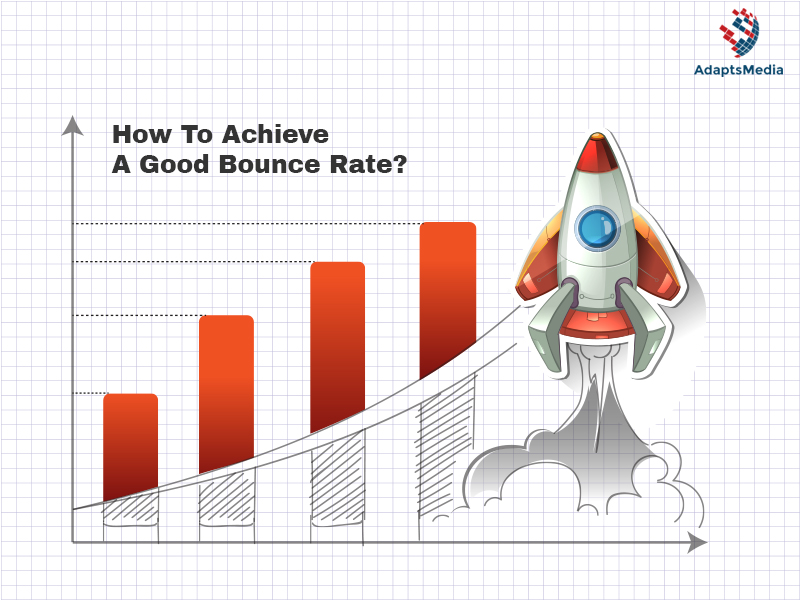
    How to achieve a good bounce rate?

    A high bounce rate has a significant negative impact on the overall performance of your website. But with proper strategy, you can reduce its rate for better SEO performance. Here are some of the ways to do it:

    • Improving the readability of the content is the first step you should take to lower the bounce rate. Even if your writing is the best, lacking a proper format will make it difficult for the readers to stay engaged. So, focus on ensuring the written content has proper formatting.
    • As mentioned above, pop-ups are a debatable topic among the users and the marketing team. While publishing more ads can be the marketing team’s goal, overdoing it will rather be a problem for your website as it would disrupt your audience’s attention.
    • Call-to-actions are important. A catchy call to action can do wonders for your website. It increases your audience’s dwell time and influences them to engage with you in many ways.
    • Knowing which keywords to use and which to discard is a delicate art. When used correctly, keywords can bring traffic to your website and increase engagement. So, always look for keywords that match the content of your website and have high-performance rates.

    Parting Words

    We know how much effort goes into making and sustaining a website, so it feels disappointing when it doesn’t manage to have a low bounce rate only because of mistakes you didn’t even know you were committing. We hope this article gave you a clearer idea of how bounce rate works and how you can achieve the desired rates for your website and ensure SEO success. Best of luck! 

  • 7 Useful Tricks for Making Your Content SEO Friendly and Engaging

    7 Useful Tricks for Making Your Content SEO Friendly and Engaging

    The mark of good, SEO-friendly content is that it should be meant for the users looking for answers to their queries and not for algorithms. The goal is to ensure that it’s written targeting the audience and builds a connection with the readers rather than making them feel disconnected and uninterested. This can only be achieved by developing a certain sort of mindset and understanding who to prioritize.

    Why Is It Important to Ensure Your Content is SEO Friendly?

    The main goal of putting up the content on the internet is to leverage its connectivity to bring the attention of the audience to a particular website or blog.

    And this can only be possible when the search engines believe that the content is worthy of being pushed to a wider audience due to its relativity and the value it adds to the reader.

    If you’re still unsure of what potential does good content has, it can turn a prospect into a lead/customer without any problems.

    If making engaging and SEO friendly content is your requirement, here are 7 useful tricks you can use to ensure that the best content is produced every time:

    1. Keyword Research

    Keywords research is elementary when it comes to SEO, and the right keywords can make all the difference when creating content. Remember, no matter how creative your content is, if the right keywords do not complement it, it’ll fail to achieve its goal.

    This implies that focusing on a proper keyword strategy and research forms the basis of making sure your content is engaging as well as SEO-friendly.

    1. Related Keywords

    As mentioned above, keywords can be the game-changers for your content. But often, due to our lack of proper understanding of how the keywords work, we only end up stuck with a bunch of keywords that bring in less than desired traffic. 

    The reason for this is that we are so focused on including the top keywords in our content that we forget about the untapped potential of related keywords.

    For example, if ‘shopping’ is the primary keyword in your content, try to find a few other keywords related to it. A good set of related keywords widens your content’s range and helps target a broader section of the audience.

    Pay Attention to Your Title Tags

    There’s a famous saying that the first impression is the last impression. A good title tag shows if the copywriter has put an extra effort into producing the best possible content.

    The reason behind this being a well-planned title can work as an appetizer for your reader, keeping them engaged throughout the article. A good title tag always fulfill certain goals like

    • Increases your reader’s curiosity
    • Provides a pathway for the user to achieve something.
    • Builds credibility.
    • Creates the necessity of your product.
    • Answers the question of why your brand.

    Having odd numbers, parenthesis, and brackets in your times have been found psychologically more impactful in grabbing the reader’s attention.

    1. Know Your Reader’s Intent

    A common mistake we make while writing a piece of content for the web is that we mistake search engines to be the first priority. Good content rather does the opposite and puts the reader’s intent first.

    This creates a sense of connectivity between the user and your content. This is because search queries are always a way for the user to meet a certain goal. Generally, you’re going to come as three types of user’s intent:

    Informational 

    The user is trying to gather information on a certain topic through search queries. This form of user intent has the best chance of bringing in organic traffic. To cater to this need, your content needs to be long enough to fuel the prospect’s knowledge needs in order to turn him into a potential lead.

    Transactional 

    The user here has already acquired the information he wants and is ready to take action. Thus focusing on short, crisp, and to the point, content is the way to go instead of long ones.

    The user is trying to find a location, such as looking for the name iPhone. You should focus on achieving that rather than on words related to android phones.

    Knowing how to serve each type of user’s intent will help you in the long run in SEO. So, be aware of not just your resources but also know your opponents. 

    Instead of focusing on only the keywords used by your competitors, which might lead you to be stuck in a herd, find your pool of keywords even if it contains some with zero search volume.

    1. Get Down to the Business and Write.

    The biggest problem with content creation for the internet is that we’re busy filling our baskets with technical bits and pieces. We completely forget what forms the basics of it; the writing.

    Start writing with a simple plan that serves a certain goal of the reader. 

    Remember, perfection is not the goal here when writing. Rather, try to draft all the pieces of information you find important and organize them. You won’t get the cream content in your first draft; what it does is lay a pathway for you to work on the information you have in your hand to create something magical and relatable from it in the final copy.

    5. Take Care of the Content Structure and Quality

    A good structure is essential for driving traffic and ranking on SERP. Subheadings make the content scannable and easy to read. Blogs and articles with H2 and H3 tags tend to have higher traffic, shares, and backlinks performance. You can consider adding a table of contents at the beginning if the blog is too long. The goal is to structure the article in a way that it makes it easy for the users to decipher the context. Remember, you shouldn’t overdo by making the structure too complex with multiple subheadings.

    6. Meta Descriptions Need Proper Care and Attention

    Don’t exhaust all your attention creating the best title, rather distribute among the title as well as the meta description. You may argue that meta descriptions don’t influence Google rankings as the company itself cleared the confusion around the matter officially. Despite that, meta descriptions bring value to your article.

    Even if it fails to rank your content, it gives your reader a taste of the content, just enough to spike their curiosity, leading them to satisfy this urge by clicking on your link.

    7. Review Goes a Long Way

    You might think you have the best content, especially after putting so much effort and time into it. So, going ahead with posting without revision won’t matter.

    But this is where you create the chances for mistakes; focusing on revisions is as important as creating the content. 

    You need to check for any discrepancies and make sure you see how the final article will look in front of your audience after being posted. This will give you a better idea of which areas need to be redone to build a steady flow in your article.

    Conclusion

    It is not about choosing whether to be technically rich or creative when it comes to content creation. A well-articulated content always comes from the perfect balance of both technicalities as well as creativity. 

    As long as you’re trying to achieve the goal of satisfying your reader’s needs and not creating algorithms, you’re on the right track. Remember, it is important to give equal attention to all the above-mentioned points instead of simply focusing on a particular order to make your content more engaging and SEO-friendly.

  • 6 Ways Google Trends Can Make Your Content Marketing and SEO more Impactful

    6 Ways Google Trends Can Make Your Content Marketing and SEO more Impactful

    Whether finding a place to eat or looking for a new store for shopping, there are hundreds of reasons you use Google. But what if along with these actions, Google could help you create more impactful SEO and content marketing campaigns? Or maybe help you understand your target audience’s behavior and their likes and dislikes for you to create a profile of them for better understanding. Well, that’s now possible – thanks to Google Trends!

    But before we start discussing how Google Trends can be pivotal in helping you understand the target audience in a better way, let us first start by understanding what Google Trends is. 

    In simple words, it is a website by Google that does an analysis of search queries on Google Search across the globe and ranks them in an order based on popularity. It does so with the help of charts and graphs to analyze the various search queries over a particular period of time. 

    The data is anonymous and ranked on the basis of how many times it has been searched on a global scale or even city-level geography. Thus it helps marketers to gain crucial insights into their audience in a much better way in real-time. For example, using Google trends, you can track if the search amount has increased or decreased for a particular topic over time in an area of your liking. 

    How Can Google Trends Boost Your SEO Endeavors? 

    Now that you have an idea of what Google Trends is and how it works, let us look at some of the ways it SEO specialists and content marketers in their keyword research:

    Provides Greater Accuracy of Keywords

    Google Trends are the only keyword research tool that provides insights on the basis of real Google searches. While the tool doesn’t have the exact amount of traffic that is available similar to other paid SEO tools, the information provided is more authentic. This is simply because the exact numbers provided by the other SEO tools are estimates made out of the extrapolation of data from data providers. 

    Thus adding Google trends to your arsenal with other SEO tools will ensure you have a better output than simply relying on one of the two.

    Throws Light On Pool of Crowd-Pulling Topics

    Whether it is SEO or content marketing that you want to excel in, managing to grab the attention of a target audience plays a crucial role in both processes. Finding topics that people actually want to read is as important as knowing the technicalities of the process. This is because engagement plays a major role in the desired output of the whole process. 

    But finding topics interesting enough to pull the crowd is a difficult task many people have difficulty in; for them, Google trends is a boon. Using specific search phrases in Google Trends, you can better understand the interest around it and decide if it’s worthy of being used for content creation or merely a waste of time and effort.

    Highlights Seasonal Trends.

    Seasonal trends are of great importance in sectors like hospitality and travel, along with e-commerce. Using Google Trends, you can better understand which product or service sees a spike in its popularity during a particular season. Let us understand this with an example, suppose a dealer of winter wear wants to find out which products are in trend among the youth on Google search results, Google trends can work wonders. 

    Not only that, you can also see the months with the most chances of the product receiving greater attention. This information can then be leveraged to have a better understanding of the target audience and strategize for profits.

    Helps in Product Innovation

    As discussed in above point, Google Trends can help you understand which is the best time for your products to be popular among the target audience. But it doesn’t end here. Did you know you can also use Google Trends for product innovation purposes? 

    The preferences of consumers keep changing almost every second and thus it becomes almost impossible to keep track of the latest trends and issues. However, using Google Trends, you can have a better idea of the current market trends and ways to modify their products accordingly. For example, the design, material, etc. of a product can be changed from time to time based on the collected data to keep it relevant to the current styles and ensure constant popularity among the customers.

    Aids in Narrowing Down Content Topics

    Google Correlate is one of the most underrated tools of Google Trends but still is something everyone related to content creation and marketing should have an idea of. This tool lets you find topics related to your searched terms. Now you might be wondering how that would help you. Let us understand that with an example. Suppose you are planning to write a blog on cooking. Using the Correlate, you’ll come across several other topics that are related to cooking and have been searched by your target audience. 

    With Correlate, you’ll have the option to increase your relativity by including the related topics in your work and widening the range of your audience. The wider your content manages to reach, the more chances it has of bringing better traffic to your blog or website. Thus, you can cater to a large group of people instead of focusing on a niche and not compromise on the original intention of creating the content. 

    Helps in Building Content Calendar

    Knowing which is the best time to post your content is as essential as creating the most creative content. This is because even the best-created content will fail to grab the desired attention if posted without a proper strategy. Posting good content when there is almost no one to engage with it is like throwing away the best tool you have in your arsenal. For example, photos posted on Instagram at certain hours of the day seem to have more reach than those posted randomly. 

    But it is quite difficult to know the right time for posting without any proper tools. Using Google Trends can ease the problem for you and let you develop a content calendar for your content marketing strategy. 

    Conclusion

    Google Trends has a long list of benefits in SEO and content marketing. While the list is a long one, these are just a few of the ways using Google Trends can ease your workflow and ensure better results. And the best part about Google Trends is that it is completely free to use, so you don’t need to shell out another tool to perform your SEO and content marketing tasks. 

    If used properly, Google Trends has the potential to bring a drastic change in the quality of your work, and not much technical skill is needed to make use of the tool. Anyone spending some time knowing the tool can start.

  • The Next Big Things for Mobile Advertising: A Detailed Guide (Updated for 2022)

    The Next Big Things for Mobile Advertising: A Detailed Guide (Updated for 2022)

    Advertising is witnessing a paradigm shift over the years. While traditional advertising methods such as newspapers, television and radio commercials, etc., are slowly falling behind, digital advertising is erupting as the next big thing. Mobile advertising occupies a central role in digital advertising and is throwing open many opportunities for marketers to explore. 

    In the last few years, smartphones have managed to become the leading digital device for ads.  It has managed to become so popular that according to the projections of BIA Advisory Services, smartphones might replace mails completely as the most suitable mode for digital ads in the U.S. It is also speculated that around 2023, this gap will further widen. 

    But how did we come to this situation, and what’s next? In today’s post, we’ll be looking at some of the factors responsible for this popularity of mobiles in terms of advertising and what more does it have in the bag to offer in the future.

    What to Led to the Evolution of Mobile Advertising? 

    Mobile advertising has come a long way since marketers started using it. Here are a few factors that led to the boom of mobile advertising. 

    • The rise of online virtual consumer channels that provide delivery and curbside pickup in the most popular categories such as retails, CPG, and restaurants led to a decline in the footfall of retail stores.
    • The COVID pandemic forced everyone to stay indoors during the major part of last year and this year, leading to a significant increase in content consumption through mobile devices. From work from home, online classes to accessing OTT platforms, mobile devices became the go-to medium for any digital service, giving rise to a fertile ground for businesses and brands to find customers.
    • Traditional media has been on a downward movement for quite some time now, and this has led to mobiles winning a more significant share of revenue in the media time.
    • The pandemic also made people dependent on mobiles to get hold of essentials, which gave rise to the popularity of several e-commerce channels as suitable alternatives. 

    Further, the rise of gaming, social media, podcasting, short video platforms like TikTok, etc., has also increased the average duration a user spends on a mobile device.  According to data, the current screen time of an adult is 4 hours and 23 minutes(non-voice activities) on average, a decent increase from 3 hours and 45 minutes in 2019.

    All these reveal that mobile devices, especially smartphones, have become the perfect place for brands and businesses to find their potential customers and start indirect or direct interaction. Marketers, too, are trying their best to grab this opportunity by allocating a significant marketing budget to mobile advertising because of successful lead conversions.

    Now that you have understood why brands spend their resources on mobile advertising, let us look at what the future holds for this digital media and how marketing can evolve with the onset of future technologies. 

    What Holds the Key to The Future of Mobile Advertising? 

    As technology continues to evolve, three emerging trends are expected to define mobile advertising of the future. 

    5G Technology

    Viewers are no longer fond of the buffering on their screens. Though 4G is way better in terms of speed and connectivity compared to the 2G and 3G of old times, it is still not enough. 5G will let us stream content seamlessly and make it possible for consumers to consume digital content in an interactive way.

    Businesses can, therefore, easily integrate ads with videos to advertise on their phone while streaming. Some reports also suggest that it will also help enhance the functioning of Artificial Reality and Virtual Reality on websites. 

    Already some e-commerce sites allow their customers to check out any product through these technologies before placing an order. 5G technology will enhance the experience due to its low latency and might let the advertisers show the ads about related products through AR and VR technology.

    Artificial Intelligence

    Artificial Intelligence is truly the future. How many times has it happened to you that you’ve searched for a particular product on an e-commerce site and ads of similar products started popping up on your social media news feed? This is just a very small example of what AI can do. 

    Mainly designed to understand and learn new information about a consumer from the response, A.I can easily get to know what are the preferences of the individual and suggest options based on the information. 

    For example, suppose two people are traveling by cab, and both of them are watching different things on their phones. Due to AI, both of them can be shown different ads based on their content preferences which will be more targeted than the generic ads for all. 

    Programmatic Advertising

    Programmatic advertising is yet another big thing for mobile advertising. Unlike earlier times when the publisher of a website or app and advertiser could directly interact for a deal, now ad spaces are sold to advertisers through different agencies. 

    To put it this way, if an advertiser wants to showcase their ads in an app, they have to buy the slot through DSPs in auctions by bidding for the slots. The most important benefit of this process is the simplicity and low consumption of money and time. 

    As a major part of the process is done in real-time through programs, there are fewer chances of mistakes, and the advertiser gets a more targeted audience who’ll connect better with their Ads. Not only that, but it also reduces the work the advertisers and publishers need to do to conduct the deal manually.

    Conclusion

    Considering all the factors listed above, it can be rightly assumed that we’re going to see some major changes in mobile advertising. No doubt, it has the potential to grow into the biggest media for advertising if the right technologies are used with the right strategies. This would benefit not only the brands or businesses but also the consumers.

  • Why a Competitive Content Analysis is the Key to Remain Ahead in the Game?

    Why a Competitive Content Analysis is the Key to Remain Ahead in the Game?

    Content always has a central role to play in every marketing strategy. Have you thought about why content is considered to be so important? The reason is that customers no longer prefer transacting with a business that’s only interested in sales. On the flip side, they prefer doing business with a company that has a story to tell.  However, creating content that perfectly portrays your value proposition is a hard job. Detailed content analysis is the key to creating compelling content. 

    Quality content can not only make your brand stand out from the herd but also make new audiences aware of the product(s) and service(s) you have on offer. This is why most businesses today are focusing on creating content that can attract, engage, and ultimately convert visitors into customers. 

    In this post, we’ve tried to analyze how detailed content analysis can help you fuel your content creation endeavors. 

    What is Competitive Content Analysis?

    Competitive content analysis is the process of analyzing your competitors for understanding the type of content they are producing and the response from the audience. All these not only help in gauging the competition but also highlights the key points for creating impactful content and bringing in more engagement on your brand’s website. Let us see how it can help your brand grow. 

    • The most common mistake that content strategists often make is that they forget to look at the bigger picture and work with a tunnel vision of only working on fine-tuning their own content. But without having a proper idea of the market or the trends, it is not possible to produce engaging content.  Keeping a brand trendy is one of the most important things to do in today’s time of free internet. If a brand fails to keep up with the current trends, it doesn’t take much time for the audience to switch to another trendier one. This is why competitive content analysis is so crucial.
    • The game of content production is always a hit and miss. Sometimes what might be best according to you might’ve already been tried by some other brand and failed in wooing the audience. Knowing this will save your time and effort in working for failure. A proper competitive content analysis lets you build your strategy on the successes and failures of your competitors so that you don’t waste your resources creating content that your audiences won’t prefer.
    • Competitive content analysis helps you or your strategic team identify the market gaps. Despite content overflow, when you start analyzing your competitors, you might come across a segment of the audience that hadn’t been catered to by your competitors. Based on this information, you can design your content strategy to lure these audiences towards your brand and increase the bandwidth of your loyal audience.
    • In today’s cut-throat competition, it is very easy for a brand to lose its individuality as businesses are strongly competing to create meaningful content. Creating content that’s already there hampers the brand’s image as the audience is not able to differentiate it from another. With proper competitive analysis, you can always keep your content fresh by taking new ideas and giving your spin on them. This will lend to a better connection with the audience and improve your brand image by making you stand apart from the herd.
    • When you study your competitors and the market, there will be times you’ll get to know what might be the next big thing in the future. A strategic content analysis will help your team prepare a plan that will help put your brand in the limelight while others are still figuring their way out.

    Why is Competitive Content Analysis So Important for Your Business?

    While SEO processes like link building, keyword mapping, and optimizing content are important for SEO success, competitive content analysis ensures you’re on the right track. In fact, to a great extent, doing SEO without proper competitive content analysis limits the desired output of the SEO. Here’s why you or your marketing team should focus on competitive content analysis:

    1. Help Find Proper Keywords

    Keywords play a major role in bringing traffic to a website but it won’t be possible for you to constantly keep track of the most useful and engaging keywords. This may hamper the inflow of traffic to your website. Through competitive content analysis, you can do a keyword gap mapping to find out which keywords are working best for your competitors but you are still to use them on your content. Based on this information, you can optimize your existing content or create new pieces.

    1. Boosts Link Building Efforts

    Link building is a crucial aspect of SEO, but it isn’t so easy finding the right websites to build links for a pathway of traffic. Using competitive content analysis, you can get to know about the websites your competitors are linked with, and based on that you too can start creating your link profile with the websites.

    1. Discovers Brand Mentions

    Competitive content analysis is not simply about focusing on others ignoring your own. On the contrary, you even need to analyze your brand judging by what others are creating. Brand mentions play a significant part in the overall growth of a business. So the more brand mentions you have for your business, the more you’re going to succeed. Again, proper competitive content analysis can help you analyze what customers are mentioning about your brand. For instance, whether they have positive or negative sentiments or want a revamped product(s). 

    How Can You Perform a Competitive Content Analysis?

    Performing a content analysis can be tricky. Here’s how you can do it: 

    1. Identify Your Main Competition

    Knowing your main competitors is the most common yet crucial thing to do. Make a list of all the competitors working on the same product or service as you and analyze critically. You’ll find several sites on the internet to help you find your competition. You can also try asking your potential customers about their current services and where there is a scope for improvement. Based on that you can prepare your strategy.

    1. Look for Online Reviews

    Customers these days love sharing their experiences on the internet. Be it a good or a bad one, they share it with others through reviews. Be sure to look for these online reviews and get a better idea of where your competitors are lacking or what good they are doing that’s bringing them attention from the audience.

    1. Make Use Tools

    There might be times when you’re feeling overwhelmed with all the information especially if you’re doing all the analysis on your own. There are several tools available for doing competitive content analysis. Here are some of the best ones we think would be helpful for you.

    • SEMrush
    • BuzzSumo
    • SpyFu
    • Owletter

    There are several other tools available on the internet, and you don’t need to stick to the ones we mentioned above. We’d advise you to try a few of them and see which one suits your needs better.

    Parting Words 

    We understand it’s going to be daunting the first time you start doing competitive content analysis and the overflow of information might make you want to put it in the backseat for the future. But this will only hamper you and your brand in the long run. Follow the steps mentioned above thoroughly and with time you’re sure to get a hang out of it. Competitive content analysis when done properly can do wonders for your brand, so make sure it is a constant.

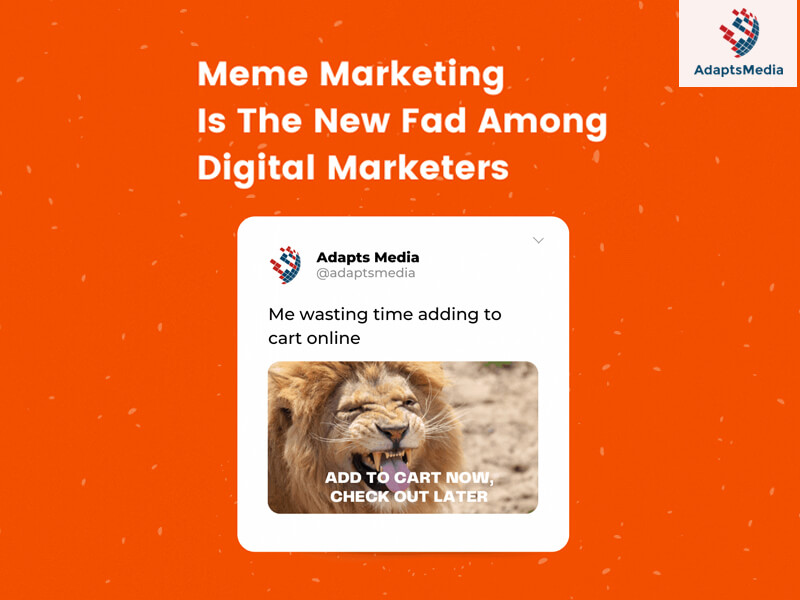
  • Why is Meme Marketing Gaining Rapid Momentum Among Marketers?

    Why is Meme Marketing Gaining Rapid Momentum Among Marketers?

    Visualizing a digital world without memes has become almost unthinkable, with funny videos, vines, and reels overtaking textual content on social media. On average, a millennial spends over 200 minutes of their daily lives online. In comparison, Gen-Z’s are bound to be more attracted to their social media profiles than their older counterparts. As such, memes are being consumed at a rapid pace. 

    The word meme, first coined by Richard Dawkins in 1976, refers to any cultural symbol that is transmitted across various groups like a viral infection. In the urban setting, a meme is a virally transmitted image that makes the masses feel the humor. Since the start of the pandemic, sharing memes has become the trendiest aspect of the internet. 

    Social media marketing is key to the success of any ambitious business. However, branding on social media is often greeted with scorn. 

    Just think about it, do people log on to social media platforms like Instagram to see brands promoting their content through blogs? Absolutely not! The younger generation uses social media as an escapade – something that is going to take their minds off their hectic lives. That is why Gen-Z’s are so opposed to brand promotion. They avoid all kinds of promotional posts. 

    In light of this, marketers found an interesting way to reach out to the younger generation – meme marketing.

    What is Meme Marketing?

    To put it simply, meme marketing is a part of viral marketing. Through this practice, brands try to use memes to appeal to the younger generation and get them to interact with their businesses. All this is done in a very strategic manner so that brands can capture the attention of their potential customers while also staying relevant to their business’s objectives. 

    Let us now talk about some examples where popular brands successfully using meme marketing:

    1. Netflix: If you are an active user of social media, you must be aware of the viral ‘Bird Box’ trend that swept the internet off its feed. 

    Yes, you heard it right. The popular Bird Box trend was a marketing strategy launched by none other than Netflix. It was a promotional stunt to increase user engagement and promote their latest original movie. And it worked wonders! People went crazy after the meme and used Netflix’s preferred hash-tags to contribute to the trend. All in all, it was a spectacular marketing stunt by Netflix. 

    2. BarkBox: BarkBox is a fairly successful organization famed for its dog products and services. Naturally, the company has a huge number of followers who adore puppies. To leverage this situation in their favor, BarkBox has been posting cute and funny dog memes for a long time. It’s giving them a huge amount of exposure and increasing their overall stature.

    3. Wendy’s: Everyone knows about this popular American fast food restaurant chain. Wendy’s Twitter presence is something that needs to be appreciated. Their feed is full of memes, jokes, and sassy humor that appeals to the younger generation’s interests. Naturally, Wendy’s success is a well-known story. 

    Benefits of Meme Marketing:

    So now that we know WHAT meme marketing is let us talk about WHY meme marketing is important for any business’s marketing strategy.

    1. Cost Effective – It is natural for companies to be attracted to numbers. Using marketing trends that do not cost a bombshell is mouth-watering for all kinds of organizations. Meme marketing is something that burns a tiny portion of the marketing budget. The necessity for meme marketing is a team of creative employees who are up to date with the latest internet trends, and that doesn’t cost much!

    2. Popularity & Engagement – Memes have a massive fan base. The craze has increased ever since the start of the pandemic in 2020. People take to their social media accounts to satiate their hunger for memes. Organizations can tap into this frenzy through the use of strategized meme marketing. And results speak for themselves, business engagements skyrockets if done the right way. 

    3. Appealing Nature – Just think for yourself – would anyone like to read a 500-word blog on your product when they log into their Instagram account? No. 

    The younger generation has shortened attention spans. Memes appeal to their interests for this very reason. They can view and share the memes that they like, all within 10 seconds. They are more likely to interact with meme marketing than any other form of branding. 

    4. Lifespan – If the meme is creative, its lifespan can be very long. This means less effort for companies as they can recycle memes from the same trend. However, trying to revive dead memes has never worked, and organizations need to avoid doing that. 

    5. Easy to Create – Creating memes is not rocket science. It doesn’t require the use of any complex software or tool. All you need is a creative mindset, a relevant image, and a cracking punch-line. Thus, memes can be pushed out at a rapid pace. 

    Dos and Don’ts of Meme Marketing

    Before splashing into the trend of meme marketing, an organization needs to keep in mind the following:

    Dos:

    • Be on the lookout for existing and trendy memes and try to connect them with your product/services. 
    • Make sure that your meme lingo is on point. If not, your customers will be put off and recognize that you’re trying too hard. 
    • Don’t try to construct memes that everyone would understand. Only appeal to your target audience. 

    Don’ts: 

    • Never try to pick up and dead or dying trend. 
    • Don’t try to hop on each trend on the internet. Be minimalistic and patient. 
    • Don’t delegate meme marketing to an employee who’s not in touch with the concept of memes and social media trends. 

    Start Meme-ing! 

    The benefits of meme marketing are immense. For a little next to nothing, your organization could scrape in tons of followers through the compelling nature of memes. Top organizations have been leveraging user interests for several years now. With memes being the primary landscape of the social media world, it’s time for your business to use them in your marketing strategy. 

    Meme marketing requires next to no investment while providing pleasing returns over your long and short-term future. Now that you’ve acquainted yourself with the benefits of meme marketing, it’s time to hop on to Twitter and get to know the latest meme trends for your business!

  • Why is Video Marketing so Important?

    Why is Video Marketing so Important?

    Gone are the days when marketers just had the option to rely on image-based advertisement campaigns. With an influx of video-related content and their rising popularity on social media platforms like Instagram (Reels) and TikTok, video-based advertisements are now more critical than ever. As a result, marketing experts all over the world are incorporating videos into their campaigns.

    Why is Video Marketing Important?

    Video marketing is now playing a central role in digital marketing due to its innate storytelling ability. Here’s why we think it’s high time you must adopt it for higher returns:

    1. Consumers Are More Likely to Purchase Goods and Services That Are Represented by a Video

    According to studies, 64-85% of the customers are more likely to invest in your products and services if a video advertisement represents them. This statistic alone makes video marketing a viable and essential element for your business’s success.

    2. Business Professionals Are Likely to Investigate the Products They Are Interested in through Video Advertisements

    Another study has made an impressive claim stating that around 75% of business professionals like to watch promotional videos of different brands to find out more about the products they are interested in.

    A large section of these videos is found through YouTube advertisements. Half of the professionals and consumers who watch these ads are likely to visit the business’s website to explore the product.

    Similarly, sharing video advertisements on social media platforms for promotion can be an excellent strategy as most mainstream applications have altered their algorithm to favour short video posts.

    3. Shorter Videos Are More Likely to Attract a Customer’s Attention than Image Posts

    You might find it hard to believe, but consumers tend to favour short videos over image posts. Many studies believe that this behaviour is because they can perform some other task while watching a video, not the case with image content. Your marketing strategy should be taking advantage of this recent affliction towards video content and establish a global reach.

    Getting Started with Video Marketing

    Let’s face it – video marketing isn’t a hack that you can plug in and reap all the rewards. To make sure that your content stands out, you have to do it right. Here’s what you can do to make your video marketing campaign a greater success even if you have a constrained budget:

    1. Use a Smartphone – You don’t need to spend any extra income on buying DSLR cameras. Nowadays, mobile cameras are good enough for creating videos for YouTube. All you need to do is, have a good script ready to enlighten the customers about your product(s) or service(s).

    2. Flaunt Your Product through Demo Videos – Demo videos need to be short, educational, and informative about the kinds of products and services you are offering. They help consumers reach a decision faster and more effectively.

    3. Get on the Social Media Bandwagon – Don’t just stick to mainstream video applications like YouTube. TikTok videos and Instagram reels are a great way to put your message across. YouTube shorts are also an excellent way to reach a wider base of customers.

    4. Post Interesting How-to Videos – Video marketing shouldn’t just be limited to your products and services. You can post instructional and educational videos that are relevant to your industry. It’s all about increasing your interaction and engagement with your customers. If you keep posting interesting and relevant videos, the chances are that consumers will follow your business just for that.

    5. Post Customer Testimonial Videos –  Customer testimonial videos are a great way to increase brand credibility. With so many options available in the market, you need to stand out of the crowd. Consumers research a lot about the product(s)/ service(s) they are interested in before deciding. The testimonial videos are a great way to convince customers that your products and services enjoy a competitive advantage.

    Benefits of Video Marketing

    We have discussed the many factors that make video marketing an essential addition to your advertising campaign. As consumer behaviour continues to evolve, short promotional videos are capturing customer attention.

    To sum up, here are some of the major benefits of video marketing:

    • Videos give more exposure and increased engagement with customers.
    • They increase a customer’s understanding of the business’s product(s)/ service(s).
    • It helps rank the content higher on SERP by driving relevant search traffic.
    • Video content is visible for longer periods on social feeds.
    • They are one of the most effective mediums for sales pitches.
    • Short videos are trending across the internet.

    Final Words

    You need to be highly creative while adopting video marketing strategies, and each of your videos should uniquely represent your brand message. To put it this way, you have to post videos that appeal to the masses and are short, interesting, and engaging.

    That being said, video content provides the best return on investment in terms of engagement and traction. So, equipping your marketing team with video and social media experts would be an excellent way to kick-start your digital marketing endeavours.

  • How to Prepare for Core Web Vitals Update in 2021

    How to Prepare for Core Web Vitals Update in 2021

    In May 2020, Google announced an update that may compel webmasters to rethink optimizing their website. Google iterated that Core Web Vitals will become determinant ranking signals for search results.  They gave website owners one year to prepare for the update, stating that the changes will be effective from May 2021 onwards.

    They decided to announce this update after thorough research on users’ preference for websites. In this blog, we have thrown light on web vitals update and what do they signify for webmasters. 

    What are Core Web Vitals?

    Google had earlier stipulated that the Core Web Vitals update will be effective come May 2021. But due to several intervening factors, the update was postponed till June. Google continued that they won’t implement all the changes in the ranking signals by late August 2021. This leaves you with plenty of time to optimize your website’s weaknesses before the changes roll out. But to do that, you need to understand what it’s all about. 

    In the simplest terms, Core Web Vitals are three essential metrics that indicate overall web page experience. The three metrics are:

    • Largest Contentful Paint (LCP)
    • Cumulative Layout Shift (CLS)
    • First Input Delay (FID)

    These are the three key indicators that will guide you on whether or not your website is prepared for Google’s new update. 

    Google aims to use these metrics to evaluate the user’s potential experience when they’re browsing a web page. The performance of the web pages will determine their overall search rankings. 

    Let’s study each in detail. 

    1.) Largest Contentful Paint (LCP)

    LCP is an indicator of the average loading time for a web page. Technically, it measures the speed and performance of a web page. The optimum value for LCP should be around 2.5 seconds as per Google’s standards. 

    2.) Cumulative Layout Shift (CLS)

    The loading speed of a web page alone could be deceptive. This is why Google introduced Cumulative Layout Shift as one of its metrics. It’s responsible for measuring a web page’s visual stability. 

    Cumulative Layout Shift checks the number of unstable objects and elements on a web page that shift and move around in an untimely manner, leading to hindrance in the rendering/loading performance of the user. In other words, it counts the number of layout shifts that the web page experiences during its life span.

    An optimum CLS value for a web page would be less than 0.1. 

    3.) First Input Delay (FID)

    First Input Delay evaluates a web page’s interactivity. It determines the time it takes for a user to interact with an element within the web page from the time the page first starts processing the user’s actions. 

    The ideal FID score for a web page should be around 100 ms. 

    It is important to note that these Core Web Vitals are not permanent. They will change from year to year depending upon the users as their preferences for an ideal website change. 

    Addition of Visual Indicators or Labels in Search Results

    When the update goes live, Google plans to sample different methods to display a visual indicator on the search results page. The purpose of these labels is to let the searcher know if a specific result on the results page is expected to provide a good page experience to the searcher. 

    Earlier, Google used similar visual indicators to point out slow and mobile-friendly websites. If the tests are successful, then you can expect to see specific visual indicators on search results that will distinguish well-optimized web pages from the under-performing ones. 

    Implications of the Update

    By now, it is apparent that this update will change the algorithm through which Google evaluates a website’s on-page performance. The new metrics will be key in deciding the search rankings of different web pages based on the efficiency of their Core Web Vitals. 

    At the same time, the possibility of having visual labels on the search results page means that the users will be inclined to click more on pages with positive evaluations from Google. This will affect a website’s engagement rate and organic reach by a huge margin. 

    All this calls for a massive overhaul from concerned website owners. According to a study, when the announcement was released, less than 15% of the pages are optimized to pass Google’s Core Web Vitals Update. It’s important to note that changes will not be content-based at all. The new update is all about the technical aspects of a website. 

    The website developers and coders are the ones that have the necessary ammunition to make the necessary overhaul to fit Google’s new ranking criteria. 

    Preparing for the Update

    Google will now use Core Web Vitals to evaluate and determine the rankings of different web pages. Most of the websites still haven’t reached the optimization levels that are necessary to match Google’s standards. If things continue at the same pace, many businesses will take a massive hit on their online reach and engagement.

    But with the updates being postponed for another month, you still have a chance to get ahead of your indifferent competitors. Here’s what you can do to prepare yourself for the new update. 

    Useful Tools

    Here are some tools that can aid you in your quest for website optimization. 

    1. Google Search Console

    Google Search Console can help you immensely in abiding by the Web Vitals update. With the announcement, Google Search Console now comes with a separate section only for Core Web Vitals. This section evaluates your web page and rates it as high, medium, or low priority, and compiles reports to determine if it will perform well or not. 

    Note that Google Search Console uses the page’s templates to determine its functionality and not the URLs. The reason behind this logic is that, in most cases, templates are similar across all URLs. So, this report will be on template-level and arguably more efficient as it is the templates that need editing and not the URLs. Implementing changes at the template level will mean that it will be easy to apply those changes at wider levels as well. 

    1. Google Developer Tools

    Google is continually improvising to improve user experience. They launched the developer tools to help website owners measure important metrics. Using developer tools to keep track of your website’s weaker pages can prove to be tedious, but it is just as rewarding. The tool can help you keep track of:

    1. Large Contentful Paint (LCP)
    2. First Input Delay (FID)
    3. Cumulative Layout Shift (CLS)
    4. First Contentful Paint (FCP)
    5. Time to First Byte (TTFB)

    Tips to Improve Core Web Vitals

    You can implement some of these tips to enhance your website’s visual loading, make it more mobile-friendly, and improve overall core web vitals. 

    1.) Reduce JS Execution:

    One of the main reasons behind a poor FID score is poorly optimized JS (JavaScript) execution. The best solution is to ask your website developers to get rid of unused JS. 

    2.) Compress Images:

    For most web pages, the largest elements are high-definition images. They can hog up a user’s loading time and decrease your LCP score. The best solution for this is to use compressed images on your web pages. The simplest way to do this is to use an online image-compressing website. 

    3.) Give Embeds and Images Proper Dimensions:

    If you have a poor CLS score, it might be a result of inconsistent or unavailable dimensions of images, ads, or embeds in your CSS file. By allotting proper dimensions to these elements, you will help the browser allocate appropriate space on the web page. This considerably improves the CLS score. 

    2.) Make your Website Mobile-Friendly:

    A mobile-friendly website is essential even when Google’s core web vitals update was not put in place. So, paying attention to mobile friendliness is much more important. 

    Start Preparing

    The Core Web Vitals update will bring a new dynamic to search rankings. It’s an opportunity for website owners to gain an edge over their competitors. There is a high chance that many site owners are not even aware of this upcoming update. Knowing about Core Web Vitals is the first step of preparation. After that, you can optimize your website before the update kicks in. 

    So start evaluating your website and get your developers to look for solutions straight away!