Author: Shruti Goswami

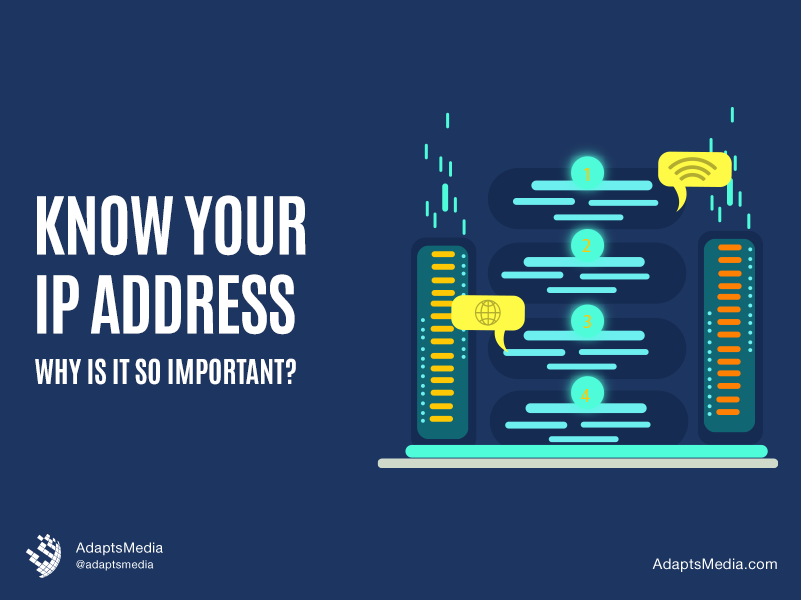
  • Do you know your IP address? What makes it so important?

    Do you know your IP address? What makes it so important?

    Who hasn’t heard the term ‘IP Address’? It is one of the most commonly used terms related to the internet and can be heard quite frequently. Remember, some apps were banned from the Google Play Store, and others were classified as malware – one thing that we heard in common is that they are hacking your IP address. 

    So what is this IP Address, and what makes it so critical that people go gaga over it and its security? 

    In this blog, we’ll look into the various aspects of this technical term and break it into simple information.

    Let us begin by addressing the million-dollar question, what is an IP address?

    What Is an IP Address?  

    Internet Protocol address, commonly known as IP address, technically is an identifier used to send or receive data information over two or more devices connected over the internet.  The IP address can be considered as the postal address of every device on the internet in layman’s terms. It‘s a string of numbers that are separated by a period. Each IP address consists of 4 sets of numbers in a single string. 

    Looking at the string, you might think that it’s just a bunch of random numbers. As a matter of fact, the IP address is not just another set of random numbers. Each IP address is produced mathematically and allocated by the Internet Assigned Numbers Authority (IANA) – a subdivision of the Internet Corporation for Assigned Names and Numbers or ICANN. The four sets of numbers can have any number from 0 to 255.

    How Does the IP Address Work?

    As we have a brief idea about what IP address means, let us discuss how it works and why it is so important to pay attention to your IP address.

    Technically speaking, the Internet Protocol is a set of guidelines in a language that can be understood and followed by every device on the internet. All the functions like sending, receiving, finding data information by the devices are done following these set guidelines in the background. 

    Here’s a brief explanation of the backend process:

    • Any device indirectly connects to the internet on a network provided to it by a particular authority that grants the necessary permission.
    • Depending on the place where you’re using the internet, the network will by default be your own Internet Service Provider or the one used by the place.
    • Now, as all the data movement is happening through the ISP, they provide each device with an IP address that is singular in nature. No two devices can have the same IP address.
    • One thing to remember is that every time you connect to the internet, your device gets a new IP address. 

    Types of IP Addresses

    Based on their function and nature, IP addresses can be classified into different categories, and even the categories can be furthermore divided into more types.

    1. Consumer IP Address

    Consumer IP addresses are owned by individuals, but mostly Companies. For example, when the individual or company buys a service plan from an ISP, one personal IP address and a public IP is provided to be used inside and outside the network.

    1. Private IP Address

    All the devices connected to your internet, like smartphone, laptops, computers, etc., have a private address. Even the recent Bluetooth and Internet Of Things enabled devices will have a separate IP address.

    1. Public IP Address

    Though all the active devices on your network have their separate addresses, the whole network has an IP address of its own. That is known as the Public IP address. It connects your router to the ISP’s network. And all the other devices not connected to your network will need this IP address to locate a device. Again, public IP address is classified into the following:

    1. Dynamic IP address

    A dynamic IP address is the most commonly used type of IP address. It is used by both individuals and companies. An ISP buys a bulk of addresses and assigns them to its clients automatically. At times, they also reshuffle the lot and allot the old, unused addresses to new customers.

    1. Static IP address

    Static addresses are rarely used. However, if someone plans to host a server of their own, it needs to have a static address as the devices connected to it will not be able to locate it over dynamic addresses. The Static IP address makes sure that the connected devices are in constant contact without any loss of data.

    Why Are IPs Considered Crucial? 

    No, why do we consider IP addresses to be so necessary?

    As you’ve understood by now, an IP address is a gateway to your device as long as it’s connected to the internet. This makes IP addresses vulnerable to outside attacks from hackers and other cybercriminals.

    Some of the most common ways that they can hamper you by attacking your IP address are as follows:

    • Online Stalking

    One of the most common forms of cyber attack is online stalking. Hackers using particular tools can easily track all your movements as well as collect your personal information by stalking your online activities. For example, we often end up giving away our IP address through several video games, websites, online chatting platforms, etc. Hackers can collect the IP address and track the real-time location and other information about the user.

    • Illegal Downloads

    Downloading illegal contents using your address is also another popular form of cyber attack. After getting your IP address, the cybercriminals will use it to download illegal content, making you responsible for the crime.

    • Causing Harm in Real Life

    As attackers can track your location and get a complete idea about your residential address, you’ll be vulnerable to threats like burglary.

    • Hacking and Controlling Your Device

    Hacking is not only limited to taking over your IP address but rather much more than that. For example, using your IP address, the hacker can access your device and steal all your private information stored on it, like bank details, passwords, etc. They can also install malware on your device.

    What Measures Can You Take?  

    All these factors make IP address a key component in our digital lives. And so necessary steps need to be taken to protect it from any sort of unwanted threat. Here are some things you can do to keep your IP address safe from falling into the wrong hands.

    1. Using a Proxy server

     A proxy server is an intermediary server between your network and the internet. All the traffic is circulated through the proxy network, leaving your original network safe.

    1. Using VPN

    s

    Virtual Private Network or VPN creates a connection between your device and the internet through an encrypted virtual tunnel that acts as a safety net. Using VPN will hide your real location and bounce the data from several other places over the world.

    1. Using a unique password

    Creating a unique password is one of the simple things you can do to prevent any such attacks. All you need is to make it as difficult as possible. Remember not to use easy information like your name, birthday, etc., as they can be broken very easily by criminals.

    We hope you have a better idea of the IP address and its importance now. Following the instructions mentioned above will ensure your safety in the digital space and keep cybersecurity threats at bay.

  • 5 Common Issues That Prevent Google From Indexing Your Webpages

    5 Common Issues That Prevent Google From Indexing Your Webpages

    Google has repeatedly stated that it doesn’t index every page that it finds on a website. Google search console will tell you the pages on your website that are not indexed by Google. It also provides vital information about the issue that is preventing the search engine from indexing a particular page. 

    These include but are not limited to server errors, 404s, and hints that the page may have thin or duplicate content. But have you ever come across any concrete research or data which shows the most issues across the whole web? 

    Well, in this blog, we have thrown light on the most popular indexing issues that are preventing your pages from appearing in SERP. 

    Let’s discuss in detail! 

    What’s Indexing?

    Indexing is similar to building a library for Google to crawl the websites. If you want your pages to appear in the SERP, it’s essential to make sure that the pages are getting indexed. In layman’s terms, Google mus be able to find and save them. This will help Google properly analyse the content and decide for which queries the pages would be relevant. 

    There’s no denying that getting indexed is a prerequisite for driving organic traffic from Google. As more and more pages of your site get indexed, you have higher chances of getting ranked on Google. That’s why you must know whether Google can properly index your site. 

    Here the top 5 issues that affect Google indexing –

    1. Crawled  – currently not indexed (Quality issue).
    2. Duplicate content
    3. Discovered – currently not indexed.
    4. Soft 404
    5. Crawl issue

    Let’s now try to understand each issue in detail.

    Quality Issue 

    Quality issues include pages that have thin, misleading, or biased contents. If your page fails to provide unique, valuable content, it will become difficult for you to get all your sites indexed. 

    Duplicate Content 

    If your pages have duplicate content, the chances are that Google won’t index these. A common issue is canonical tags that are pointing to different pages. The net result? The original page won’t be indexed. 

    If you have duplicate contents, you can use the canonical tag attribute or a 301 redirect. This will ensure that the same pages on your site are not competing against each other for views, clicks, or links. 

    Crawl Budget 

    There are a range of factors that determine the frequency of Googlebots crawling your website. The bots only crawl a certain number of URLs on each website. This clearly states that optimisation is vital. So, you must take steps to ensure that it’s not wasted on pages that you think are of no significant importance. 

    Soft 404s

    404 errors imply that you have submitted either a deleted or a non-existent page for indexing. Soft 404s display “not found” information but don’t return HTTP 404 status code to the server. 

    Redirecting the pages that have been deleted or irrelevant is often a common mistake that website owners make. Multiple redirects can also show up as soft 404 errors. Ensure to shorten the redirect chains as much as you can. 

    Crawl Issues 

    Multiple redirects often show up as soft 404 errors. You must take the necessary steps to shorten the redirect chains as much as possible. 

    Key Takeaways 

    There’s one common issue that is preventing the pages from getting indexed. These are the orphan pages, that is those pages on your website that have no internal links leading to them. 

    If there is no path through which Googlebot can reach or find your page, it may not find it at all. To prevent this, you need to add links from related pages. You can fix this manually by adding orphan pages to your sitemap. 

    So, here were the 5 most common Google Indexing issues and their solutions. We hope you have developed a detailed understanding and would be able to solve the indexing issues. Let us know in the comment section if we have missed out on discussing any. Also, don’t forget to share your thoughts on this. 

  • BERT vs. SMITH: A Brief Summary to Help You Understand

    BERT vs. SMITH: A Brief Summary to Help You Understand

    Google released the BERT update in October 2019 and SMITH in November 2020.  Both these algorithm updates were based on Natural Language processing and are aimed at improving search results. 

    In this blog, we shall study about SMITH and how does it stack up against BERT. So, keep reading to find out! 

    Why were BERT and SMITH Released Anyway?

    Google released both the updates keeping NLP in mind. NLP assists in the transition from search engine understanding strings (keywords) to things (entities). There was a time when Google had no clue what is there on the page other than the content’s keywords and context. With the introduction of NLP, Google became more intelligent and now has the ability to understand the context of the words, and obviously, the tonality. 

    Many SEO gurus are of the view that BERT is the best operational NLP model. It successfully deciphers complex language structures and helps Google understand the content deeply. They further add that the biggest leap forward with BERT is the algorithm being Bidirectional. Besides understanding text from left-to-right, it can understand the context going the other way round. 

    Furthermore, the “under the hood” of BERT is exceptional and allows processing language effectively, consuming lower resources than previous models. There’s no denying that it’s an important consideration when the goal is to apply it to the entire search algorithm. 

    It doesn’t here; BERT reportedly has more than 30,000 tokens, where each represents a common word with some leftover for fragments and characters, in case the word appears to be outside than the 30,000 already provided. It is through this token processing and transformers, BERT successfully understands the sentences and the overall content. 

    What’s in SMITH?

    SMITH can handle 2,248 tokens. The documents can be up to 8x larger.

    BERT has 256 tokens per document, post which the computing cost becomes exceptionally high for it to be functional. BERT is unidirectional and, therefore, this increase in cost. To understand why computing costs increase, you must understand what it takes to decipher a sentence and a paragraph. 

    A sentence generally has few words and one core concept to decipher. This means there are only a few connections between words and ideas to retain in the memory. In the case of a paragraph, the complexity increases exponentially, and so the processing. It would require more speed and memory for Google to understand, basis the same model. 

    SMITH overcomes this by batching and doing a lot of the work offline. As a matter of fact, for SMITH to function, it relies heavily on BERT. At its core, SMITH takes a document through the following process – 

    1. It breaks the document into grouping sizes that it can handle, favouring sentences (this means the document would allocate 4.5 sentences to a block-based on length. It would then truncate that to four.
    2. Next, it processes each sentence block individually. 
    3. Finally, a transformer learns the contextual representations of each block and turns it into a document representation. To train BERT, Google’s engineers are taking a word out of a sentence and supply options.

    The better an algorithm is trained, the easier it will be for it to process the sentence blocks. The training method is similar in SMITH as well. Since all algorithms are trained for large documents, they also take passages and remove sentences. The better an algorithm is at recognizing the omitted sentences, the smarter it is. 

    So, Is SMITH Better? 

    So, do you think SMITH takes the lead? Just analyse how you use the internet. 

    Many user queries are not satisfied just with short answers but require limited and often uncomplicated data sets. SMITH is able to understand long and complex documents and also long and complex queries. This will include aggregating documents and topics to create your own answers. 

    This includes determining how content can be broken apart so that Google is able to filter the search results. This will help each one to better understand how the content pages are related to each other and how links are valued. 

    So, each has its purpose! 

    To summarise, SMITH paints the understandings of how things are. It’s more resource-intensive but is far less costly than BERT at doing the same job. BERT assists SMITH in understanding short queries and content chunks. We believe it will continue until both are replaced with a smarter algorithm inheriting the ability of both.

    So, we discussed both BERT and. SMITH in detail. We now believe you have a fair understanding of each and would be able to tweak your SEO endeavors to get the best results. If you believe we missed discussing something crucial, please feel free to let us know by commenting below. 

  • What are Dynamic QR Codes and How to Use them for your Business?

    What are Dynamic QR Codes and How to Use them for your Business?

    Quick Response Code, widely known as QR Codes, are becoming an integral part of our daily lives. Even if you’re not aware of what they are, you must’ve seen those square-shaped barcodes at random places in public.  

    QR codes are programmed to design a large amount of information and promote interaction and engagement. All you need to do to access this information is scan the code with an appropriate digital device. Businesses across industries and scales now use QR codes for marketing and advertising purposes. But before we throw light on that, let’s understand how many types of QR codes are there. 

    Types of QR Codes

    There are mainly two types of QR codes, each serving a different purpose. 

    Let’s dig deep! 

    1. Static QR Codes: In Static QR codes, the information within the code is fixed, and you cannot change it once it is functional. The code that displays the information in a Static QR code is embedded into the QR code itself. These codes are fit to contain permanent information. For example, you can use Static QR Codes to store personal information, one-time codes, etc. 
    1. Dynamic QR Codes: Contrary to Static QR codes, you can edit the content as many times as you need. These codes use a short URL to assist users to the desired page that contains relevant information. 

    Which is better – Dynamic or Static? 

    As an entrepreneur, you may want to leverage quick response codes to boost your marketing endeavours by improving communication with your users across all channels. Dynamic QR codes are now being extensively used by businesses owners across industries, while static codes are losing prominence. Let’s understand how Dynamic QR codes can be leveraged for taking a business to the next level. 

    Applications of Dynamic QR Codes:

    As we continue to embrace digital technologies, dynamic QR codes are becoming essential. They are extensively used in the following: 

    1. Touch-Less Services: 

    Nowadays, the use of touch-less food ordering and other services is gaining global popularity. With the help of these QR codes, people can carry out contactless transactions and order food with minimal physical interaction. This has not only made things more convenient for users but is also helping to promote hygiene. 

    1. Personalized Content

    What do you think happens when you scan a random QR code? Obviously, you will get access to the information stored in the core. But apart from that, the QR code has an algorithm that tracks time, location, and the device with which a user captured it. This helps businesses to generate relevant data and deliver personalized content to different people.  

    How to Create a Dynamic QR Code for your Business

    Now that you know the application of dynamic QR codes, let’s understand how you can create them. 

    Step 1: Find a QR code generating software. You can use the free tools available online. 

    Step 2: Choose the type of QR code. In this case, you need to choose a dynamic QR code. 

    Step 3: Add all the relevant information. This is the data that you want the users to see when they scan the code. 

    Step 4: Customize and style your code. Nowadays, dynamic QR codes need not only be black and white lines. You can style it to attract more customers. 

    Step 5: Finally, download the personalized QR code. You should try the QR code yourself before putting it up in any public place. 

    How to Use Dynamic QR Codes in your Business

    Dynamic QR codes serve a myriad of purposes. Let’s understand how these bar codes can help you in your growth trajectory. 

    Here’s what you can do to exploit the many benefits of a dynamic QR code:

    1.) Increase App/Website Traffic 

    If your business uses a mobile application or a website, you can use dynamic QR codes to garner customer attention. An eye-catchy QR code encourages customers to scan it, which eventually redirects them to your website or the download link of your application. Over time, this can generate a healthy amount of profits. 

    2.) Getting Reviews for your Services

    Several studies suggest that customers tend to be more open to the idea of availing services that have great reviews. But, getting honest, positive reviews can be tough! You cannot coax your customers into giving you a review, but you can surely make it more convenient for them. QR codes are easy to scan and saves them the trouble of navigating through their cell phones to give your business a review. A QR code will make their job easier and increase the chances of you getting honest customer feedback. 

    3.) Monitor Statistics

    A QR code is now an integral tool in marketing. It’s now particularly used in advertising. QR codes help businesses store relevant data in the form of statistics that they can use to drive customer engagement by using the data to devise engaging marketing campaigns. QR codes can also help you understand whether you are on the right track to meet your campaign goals. 

    Conclusion

    Dynamic QR code offers versatility and is now playing an integral role in marketing. As the digital ecosystem is gaining momentum, Dynamic QR codes are becoming the need of the hour for improving communication across all channels. They are now helping businesses of all scales take the next step in their marketing roadmap and maximize overall profitability. 

  • Top 7 Structured Testing and Execution Tools (Updated in 2021)

    Top 7 Structured Testing and Execution Tools (Updated in 2021)

    There’s no denying that creating and managing structured data is a challenging task. Any error on your JSON code can prevent validation in Google’s structured data tool. Structured data, widely referred to as Schema, helps Google better understand the content as it seeks to provide the best results to searchers based on their search intent. Structured data immensely help content stand out and capture more clicks and impressions. 

    There are several tools available that help in creating, managing, and keeping structured data up to date.  Here are the top 7 tools which we think can help you get the job done with ease! 

    1. Schema App

    Without any second thought, this is the most comprehensive tool. Schema App is the tool you would prefer if you want to execute, test, manage, and keep your structured data updated. 

    They have an exhaustive library that helps with identifying Schema. Org and connecting data, popular types, and properties. Out of the many features that the app has, you would love how it defines structured data with Wiki. 

    For example, if you are looking to optimize the product pages, the tool automatically finds the Wiki entry to define the structured data. The app also has recommended and required fields to show the attributes necessary to show up as rich results, good reporting, and data highlighter. 

    1. Merkle Structured Data Tool

    You can quickly generate basic structured data, such as an organization or FAQs. Additionally, you can generate Schema for breadcrumb, event, how-to, or job postings, to name a few. After it’s generated, you can test, copy, and add it to your site. The only drawback is that it only lists basic structure types and does not have comprehensive, structured data, vocabulary, and glossaries. 

    1. Hall Analysis 

    This tool is highly efficient in quickly generating structured data, but it’s only limited to local businesses, persons, products, events, organizations, and websites. Besides, you need to copy-paste the code into Google’s structured data tool and test for its validation.  

    1. The RankRanger Structured Data Tool

    RankRanger offers a wide range of structured data types to test. This also includes COVID-19 special announcements. The tool also allows the user to copy, reset, validate, and test the structured data. 

    1. Chrome Structured Data Plugin

    This tool is a must-have if you want to check whether structured data is present on the page as you browse the websites for auditing, research, or collecting any information. The plugin will allow you to test on Google and see if there are any errors or warnings. You can also copy the data in the table for further reference. 

    1. Google’s Structured Data Testing Tool

    You must not forget to check for structured data as a part of on-page SEO. In 2020, Google announced that its structured data tool was being deprecated. The structured data testing tool will help you get the job done with ease. 

    There is no doubt that it’s the best tool to test structured data and check what warnings and errors the tool has for a particular code. All you have to do is either enter a URL or copy-paste the code into it. You would simply love this tool because it helps check the syntax and ensures it’s validating the Schema.org standards. 

    1. Google’s Rich Results Tool

    This is another good tool to check whether a page will support rich results. You just need to enter the URL or code. 

    The most exciting part about this tool is that it offers the option to test with Google’s smartphone or Googlebot desktop. Post the test; it will tell you whether the webpage is eligible for rich results. 

    Google’s Rich Results Tool and Structured Data Tools must be used together to check whether the page is eligible for rich results and if the code has any errors in it. The biggest difference between the Google Structured Data Testing Tool and Rich Results is that the latter can only test approved classes of structured data that directly influence the appearance of search results. 

    How Can Structured Data Boost Your SEO Endeavours? 

    Structured data helps websites take the lead on SERP. It helps drive business results, improve visibility, optimize for voice search, and much more. However, the right tools are essential for creating clean codes that will be validated in Google’s Structured Data Testing Tool and Rich Results Test. These  7 tools will definitely give you the best results. 

    So, time to wrap up the discussion! Please feel free to share your thoughts in the comment section. Also, do let us know if we have missed out on discussing something important that you want us to add. 

  • How to Conduct a Comprehensive SWOT Analysis for SEO in 2021

    How to Conduct a Comprehensive SWOT Analysis for SEO in 2021

    Strength, Weakness, Opportunity, and Threat analysis, widely known as SWOT analysis, is crucial in SEO for identifying areas of priority. This includes identifying keywords, content, technical aspects of the site, linking, and competitive perspectives. A comprehensive SWOT analysis for Search Engine Optimization provides a detailed idea about the roadmap and the tasks that need to be systematically handled. 

    1. Determining The SEO Strengths

    There’s no denying that one of the primary factors that search engines take into account while determining your position on SERP is the relative strength and authority of a topical group of keywords. Identifying these keywords for which you already have some authority is an excellent way to start with. 

    Here is how you can identify your existing strengths and leverage them to boost your organic traffic – 

    • The first step that you should take is, to look for opportunities to link out from or to your best content. We believe that besides providing more comprehensive answers to your target user’s queries, it also leverages the authority of the strong piece.  
    • The next thing that you should do is, perform in-depth keyword, technical, and link audits on all your existing web pages that are currently ranking between 5 and 20 to see where there is room for improvement. 
    • Finally, determine whether or not the pages are ranking for the keywords that you want them to be. Though it may be a great idea to get your homepage ranked, this is not always sufficient as searchers will likely have to spend more time to find the answerers to their queries. 

    Determine the pages that provide the best solution to your target audience and try to rank those pages currently held by the homepage. In the process, pay attention to the types and characteristics of your strongest content as it would provide you with an idea about the type of content you should create moving forward. 

    1. Identifying Search Weaknesses

    Let’s face it – we all have our weaknesses. In SEO, it’s essential to recognize and mend those so that you can save both your time and energy. 

    • Keywords & Content

    There are undoubtedly keywords that can do wonders for your business, but you must understand that it’s essential to let go of those that would require too much time and effort.

    A quick review of the search engine results will provide you with a brief overview of the keywords that are out of your reach, based on the competition, reputation, or quality of the content. In such a scenario, try searching for more specific long-tail keywords or alternatives. You can also opt for paid promotions to generate visibility, traffic, and conversions. 

    • Technical SEO

    Another area of weakness that you need to rectify is to improve the quality of your content from a technical/structural, keyword relevance perspective. You can begin the process by identifying the areas of weakness by conducting a detailed website audit. You can use a wide range of tools for this. 

    Google Lighthouse and Search Console are the best tools, especially for analyzing the core web vitals report and mobile-friendly test. Both tools will let you know the prioritized list of issues or errors that are there in your tags, links, code, keywords, and other mobile-friendly errors. 

    The best strategy is to start fixing any issue on authority pages based on SERP. After you are done with this, you can try fixing the issues of other priority web pages based on data provided by web analytics tools, Google Analytics for example, or pages of strategic importance. 

    • Backlinks 

    Relevant backlinks obtained organically, widely referred to as inbound links, tell search engines about the authenticity of the page. All major search engines still consider inbound links as an important factor while ranking pages. Similar to keywords, it’s essential to conduct a competitor analysis for backlinks. There are several third-party tools available that will tell you the sources of the backlinks of your competitors. 

    1. Leveraging the SEO Opportunities

    Here’s how you can look at and leverage the SEO opportunities. 

    • Keywords and Content 

    Several keyword research tools will help you discover keyword and content opportunities. All these tools provide a prioritized list of high-value keywords based on estimated monthly search volumes, organic traffic, and difficulty to rank on SERP. 

    The analysis must have the effort you would have to put in to obtain authority relative to the potential return on establishing organic visibility. 

    • Backlinks 

    While typically a manually intensive process, there is long-term value in seeking out these types of backlinks.

    Despite being an intensive process, it can yield great results. There are many ways through which you can start looking for inbound links – 

    • The search engine results for the keywords you want your site to rank for are the natural standing points as the websites found with the search term relevant to the search engines. You can try looking for non-competitive backlinking opportunities, such as directories, association listings, or articles and blogs that you may be able to contribute or comment on. 
    • The search console links report is a time-tested strategy for backlink research as it gives a detailed insight into what Google recognizes as the domains linking to your content. You can also validate the quality and accuracy of the links that you already have and determine if there are any other opportunities through which you can obtain additional links from these domains. 
    • You can use several third-party backlink tools to identify potential backlink sources and domains that have already linked to your competitors. There are tools that will even help you prioritize the potential of each source and help save a lot of your time. 
    1. Knowing Your Threats in Search 

    There are several factors that can threaten your organic authority. You should ensure to avoid those to overcome penalties. 

    • Content

    The most common content threat is duplicate content. This simply means republishing content on your website without citing proper attribution to the original source. To avoid getting penalized for writing the same content, you must include canonical tags referencing source content in the header tags of the pages having duplicate content. 

    • Backlinks 

    While relevant, high-quality backlinks help boost authority, irrelevant, low-quality links can do the exact opposite. This is particularly true for paid link schemes. 

    The damage caused can be long-lasting and can even earn you strict penalties, leading to reduced organic traffic and visibility. Ensure to review your Google Search Console Links report regularly to review the domains linking to your site. 

    • Competitors 

    Even if you have strong organic visibility and traffic, there’s always a probability that a new competitor will come up. Search engines always prefer fresh and relevant content. That’s why you must monitor the SERP at periodic intervals and notice if there are any new competitors that may challenge your authority and position in due course of time. Needless to mention, the best way to combat this type of threat is to publish new content and update the existing ones. 

    So, here was a detailed guide on how to conduct a SWOT analysis. Ensure to perform it quarterly for the best SEO results for your business. This way, you can track the SEO endeavors and the improvement in organic traffic and position on the result’s page. 

  • Google Webmaster Guidelines You Need to Know and Understand in 2021

    Google Webmaster Guidelines You Need to Know and Understand in 2021

    Put no second thought into it that Google’s Webmaster Guidelines are fundamental to achieve success in your SEO endeavours. If you don’t follow the predefined guidelines, the chances are that you may experience either an algorithmic devaluation or manual penalty. 

    In the most extreme cases, your site may be permanently banned from Google’s SERFP. So, it’s essential that you understand the guidelines. 

    Let’s dig deep to understand! 

    Google Webmaster Guidelines 

    Google webmaster guidelines are separated into the following – 

    • Webmaster Guidelines – These are the best practices that you must follow so that your site appears in SERP. 
    • General Guidelines – These are the best practices that will help your site look its best in the SERPs. 
    • Content-specific Guidelines – These are the specific guidelines pertaining to the contents on your site, such as images, videos, and others. 
    • Quality Guidelines – These include all the parameters that you must follow to avoid getting penalized by Google. 

    Now that you know the guidelines you must follow, the next hurdle is to apply those on your websites in a way such it’s compliant with the guidelines. 

    You are Using  Relevant Keywords

    Your site should be easily discoverable. An easy way to determine whether you are using relevant keywords is to compare your content with the top pages and analyse the keywords they have used in their page title and meta description. You can also use SEO tools like SEMRush and Ahrefs to perform a competitor analysis. 

    If your site isn’t ranking for any relevant keyword, you need to perform a keyword research and an in-depth competitor analysis to find a set of keywords that you need to rank for to drive relevant search traffic and increase sales. 

    Your Site is Properly Interlinked 

    Google recommends that every page on your website must have at least one link from another page. Links help establish communication in the online community. You should ensure that the links on your website must be crawlable as this helps Google better understand your site. In the process, avoid using generic anchor texts while creating these links and keyword phrases for describing the outgoing page. 

    If your site has orphaned pages, make sure that at least one link from the site links to every potential pages on the site. And if the page is not a part of your site, either delete it or add a no-index tag. 

    Limit the Quantity of Baclinks on a Page 

    Google recommends not to use more than 100 links per page. It’s always better to have quality backlinks rather than focussing on quantity. As a matter of fact, too many links can adversely affect the user experience. If you have too many links per page, this may induce crawling errors. Ensure to reduce the links per page and have only the quality ones. 

    Use Robots.txt File to Manage Your Crawl Budget 

    Crawl budget optimisation is necessary to ensure that Google crawls your site efficiently and easily. You can optimise your crawl budget through the links on your site and robots.txt. 

    If you see that your website has ‘disallow: / ‘ in its robots.txt file, this means that robots.txt file is disallowing crawling. You can easily solve this by deleting the line. It may so happen that your site doesn’t have a sitemap.xml file directive in the robots.txt file. In this case, just add a directive declaring the location of the sitemap file.

    Create Useful Contents 

    It is evident that Google prefers sites that provide value to users. Before you start creating contents, perform a thorough content analysis to narrow down sites that are information rich in your niche.  This will tell you what other sites are writing about, how they are writing, and the structure they are following while creating contents. If your site is full of short, thin content, it’s time you come up with a comprehensive content strategy.  

    Include the Words that Your Users Might Use to Find Your Pages 

    When performing keyword research, ensure that you have figured out how users search for your site. When conducting keyword research, you must consider your customer’s search intent. 

    Once your keyword research is done, proceed with on-page optimisation. This includes making sure that the pages on your site have the target keyword or phrase so that it’s easily discoverable in SERP. 

    If your site doesn’t have anything but branded keyword phrases, it’s time you perform a thorough keyword research and focus on those with broader relevancy. Include those keywords not only in the main content but also in the meta description and title. 

    Design the Site So That It Has a Proper Page Hierarchy 

    Your site must be organised as per the relevance of the topics. The main topics of the site must be arranged, with subtopics arranged underneath. These are known as SEO silos. 

    There’s no denying that SEO Silos are a great way to organise the pages on a site according to the topics. Ideally, you must create a website architecture relevant to its contents. 

    If your site has pages without much interlinking and proper website architecture, you must create a siloed website architecture similar to that of your competition. This will help improve your organic traffic and ranking as a whole. 

    Make Sure that the All Important Contents are Visible

    While building a website, make sure that the most important contents of your site are visible by default. Your visitors must not be bothered by unnecessary buttons, tabs, and other navigational elements. Google recommends that you must make your information visible in the default page view. 

    So, here are the Google webmaster guidelines that you must know and understand. Unless you are thorough with these, you may earn strict penalties from search engines. Do share your thoughts in the comment section and let us know if we missed discussing something important. 

  • How to Perform a Content Gap Analysis for SEO: A 4-Step Guide

    How to Perform a Content Gap Analysis for SEO: A 4-Step Guide

    It’s 2021, and content is still the king when it comes to SEO. Unless you create engaging content and optimize it for the search engines, it will be difficult for you to rank the web pages and improve the search visibility. The golden rule of creating engaging content is to conduct a content gap analysis in the existing content. 

    This will help you formulate strategic content ideas to generate more inbound traffic, convert visitors into customers, and provide value to the target audience. We have provided a step-by-step guide to perform an effective content gap analysis and boost your SEO endeavors. 

    Let’s first understand what a content gap analysis is anyway.

    What is a Content Gap Analysis?

    A content gap analysis involves analyzing the existing content and finding potential room for improvement. The method involves identifying the existing content pieces that must align with the various stages of the target audience’s buyer’s journey. 

    Analyzing the existing content will enable you to understand where you need to improve and how you could effectively guide the readers to drive profitable customer actions. 

    A thorough content gap analysis would include an audit of the following – 

    • Webpages.
    • Blogs.
    • Social media posts.
    • Landing pages.
    • Ebooks.
    • And other content assets that you might have.

    There’s no denying the importance of a content gap analysis to find loopholes in the existing content strategy. This will help you take adequate measures to fill them and drive more inbound traffic. 

    Mapping the Content to the Buyer’s Journey 

    Needless to mention that not every visitor would make a transaction. It may so happen that they looked for some information, compared other options, or just checked out the price. So, you must create content for every part of the buyer’s journey. 

    It has been found that most brands create informative contents (like blog posts and case studies to attract audiences) and money pages to convert those visitors into buyers. But as a matter of fact, this creates content gaps, as it will fail to lure potential customers who are still in the consideration stage. A thorough content gap analysis will help you identify whether you have content for all four stages of the funnel, that is awareness, consideration, decision, and success. 

    Awareness pages must target keywords related to any problem that your customers might be facing. The content should address this problem and offer valuable information. At the consideration stage, people compare various solutions to their problems. They might prefer to read comparison guides and reviews. 

    The decision stage is the money pages, that is the sales and the services pages. These pages are the final checkpoints before any user decides to make a purchase. Finally, the success page content assures the customers that the products will meet their expectations. This can be a ThankYou page or just an email asking them to leave a review. 

    A content gap analysis will help you identify whether you have content at every stage of the buyer’s journey on your website. 

    4 Steps to Perform a Content Gap Analysis 

    Here’s a step-by-step process to find gaps in your content and fill those with an effective content strategy. 

    1. Map Your Buyer’s Journey 

    The first thing you need to do is analyze the steps that your target audience needs to take from stage 1 of the funnel to the final stage. Take some time to understand your audience’s questions, the options that they might consider, what they would prefer to buy, and the CTAs that would likely compel them to contact you. 

    1. Conduct a Thorough Market Research 

    A proven strategy to develop exciting content ideas that align with what your audience wants is to ask them directly. You can try conducting a market research survey to understand what your customers are looking for. This feedback will help you formulate your website content strategy. You can use Google Forms to create a survey and send your target audience. 

    1. Analyze the Existing Content on Your Websites

    It’s essential for you to publish content on your website that perfectly aligns with the buyer’s journey of your target customers and doesn’t have gaps for your potential customers to fall through. Crawl your website and determine how they are aligning with each stage. Then, you can determine whether there are any content opportunities that can help bridge the gap between one stage and another. 

    Another effective strategy to find content gaps in your site is to use SEO tools and analyze what keywords your site is already ranking, and related keywords that you may not be targeting with the existing content. You can take advantage of these opportunities for maximising the traffic and solidifying the content funnel. 

    1. Analyse Your Competition’s Content

    Analyzing what the competitors are doing and comparing it with the existing content of your site is a very good strategy to find content gaps. If your competitor’s funnel is similar to yours, try to understand the content they have created to direct visitors from one stage to another. 

    Ultimately, try to understand where you might have cracks so that you can create more exciting content than what your customers have already written. You can use SEO tools like SEMrush and Ahrefs to see what keywords your competitors are ranking for and how you can align these with the existing new content ideas.

    A content gap analysis primarily involves carrying out a detailed analysis of what you have and then formulating a content strategy that meets users’ multiple touchpoints. This way, you will have all the content you need to convert even a cold lead into a paying customer. 

    So, that’s how you can conduct a content gap analysis for SEO. Please share your thoughts on it and let us know if you think we have missed out on discussing any. Till then, best of luck with your content strategy! 

  • 3 Time Tested Strategies for Quickly Comparing

    3 Time Tested Strategies for Quickly Comparing

    If you want to rank on the top pages of SERP, you must be aware of how to do an in-depth competitor analysis. There’s no denying that the challenges and obstacles to making it to the top pages are continuing to grow. Competitor analysis has thus become the need of the hour for every website owner. 

    Even though there have not been many changes in Google webmaster guidelines over the years, the core algorithm has undoubtedly gone through many updates. The introduction of Knowledge Graph, Hummingbird, Rank Brain, BERT, and SMITH algorithms has made it compelling for SEO professionals to abide by all search engine guidelines and adopt only White Hat techniques.  

    Here are three tips that you could follow to compare your site to that of the competition to analyze where and how you could improve your SEO endeavors. 

    So, let’s dig deep!

    1. Evaluate Your Competition’s Website Technology 

    It’s essential to have a fast, easy-to-use, and easy-to-crawl website. There are no fixed guidelines on the technology to be used while building a website, but if you are building a new website, it’s better to analyze your competitors. Try to gather information on there – 

    • Analytics and tracking.
    • Widgets.
    • E-commerce.
    • Frameworks.
    • CDN.
    • Mapping.
    • Mobile.
    • Payment.
    • A/V Media.
    • CMS.
    • JS libraries & functions.
    • Advertising.
    • Verified links.
    • SSL Certificates.
    • Web hosting providers.
    • Name servers.
    • Email hosting providers.
    • Web servers.
    • Operating systems & servers.
    • Syndication techniques.
    • Webmaster registration.

    Furthermore, you should understand your competitor’s website architecture as it would help you establish parent and child page hierarchy and narrow down the content gap. The best way to do this is to create a competitor analysis sitemap. It’s also essential to pay attention to the core web vitals. This includes but is not limited to page speed, Chrome UX report, Search Console, and Lighthouse reports. 

    1. Perform an Audit of Website Content

    Here is how you can perform a competitor analysis on the web content – 

    • Narrow Down the Organic Keywords

    It’s a mandate to develop the right list of keywords. In all probability, your competitors have already invested a lot of time conceptualizing a keyword strategy. You can try using Ahrefs for keyword analysis. Ahrefs has a huge database of search rankings by the website. Ahrefs makes it extremely easy to determine which phrases would be difficult to rank or has the maximum potential to drive traffic. Besides keywords and rankings, they also provide a list of top-ranking pages. 

    Before finalizing the keywords you intend to rank on, you must consider the search terms your competitors are already ranking for, the opportunities they are missing, and obviously, the content gaps. This is a great strategy that would help you find the keyword and business opportunities. 

    • On-page Optimization 

    Google may not be excessively dependent on meta tags since the Knowledge Graph update, but it’s always better to have a clear roadmap at the disposal of both users and search engines. 

    A great strategy is to analyze how your pages are performing against the competition. Try using a Webpage Similarity Comparison Tool. The tool will give you a detailed comparison of the page title, meta description tag, keywords, text and word count, and top keyword phrases. 

    1. Analyze Competitor Backlinks

    Gone are the days when the number of backlinks played a crucial role in SEO. With Google’s Penguin update, the quality of links matters over quantity. Google now penalizes all the irrelevant backlinks obtained through backlink mining. You need to be careful about the inbound link you are looking to obtain. Determine if it’s worth the effort required to obtain and the relevance it holds to your niche. You can again use Ahrefs to analyze the links that your competition has already built. 

    Content and backlinks will remain the crucial aspects of Google algorithms. That’s why it’s essential to understand and neutralize any advantage that your peers might be enjoying.

    So, here was a detailed guide on you can quickly compare your website with your competition. If you feel we have missed out on discussing something crucial, please feel free to comment below.