Tag: search engine optimization

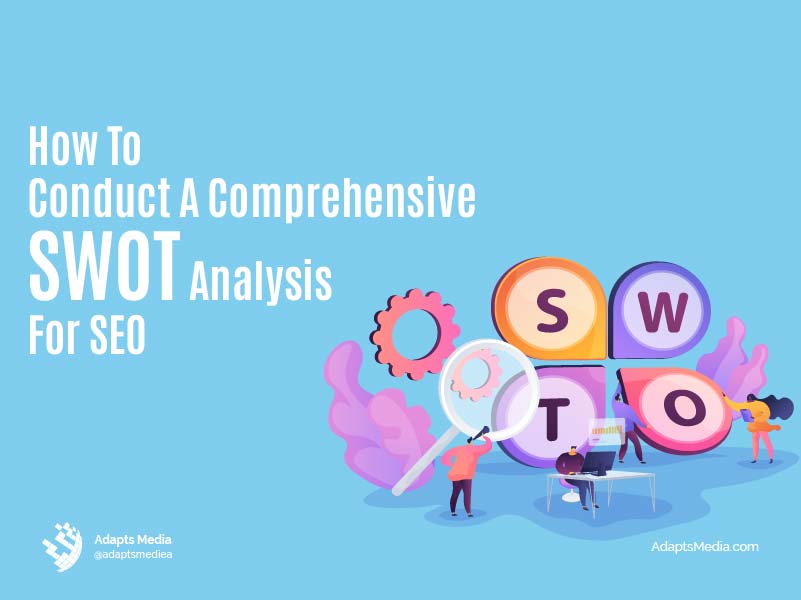
  • How to Conduct a Comprehensive SWOT Analysis for SEO in 2021

    How to Conduct a Comprehensive SWOT Analysis for SEO in 2021

    Strength, Weakness, Opportunity, and Threat analysis, widely known as SWOT analysis, is crucial in SEO for identifying areas of priority. This includes identifying keywords, content, technical aspects of the site, linking, and competitive perspectives. A comprehensive SWOT analysis for Search Engine Optimization provides a detailed idea about the roadmap and the tasks that need to be systematically handled. 

    1. Determining The SEO Strengths

    There’s no denying that one of the primary factors that search engines take into account while determining your position on SERP is the relative strength and authority of a topical group of keywords. Identifying these keywords for which you already have some authority is an excellent way to start with. 

    Here is how you can identify your existing strengths and leverage them to boost your organic traffic – 

    • The first step that you should take is, to look for opportunities to link out from or to your best content. We believe that besides providing more comprehensive answers to your target user’s queries, it also leverages the authority of the strong piece.  
    • The next thing that you should do is, perform in-depth keyword, technical, and link audits on all your existing web pages that are currently ranking between 5 and 20 to see where there is room for improvement. 
    • Finally, determine whether or not the pages are ranking for the keywords that you want them to be. Though it may be a great idea to get your homepage ranked, this is not always sufficient as searchers will likely have to spend more time to find the answerers to their queries. 

    Determine the pages that provide the best solution to your target audience and try to rank those pages currently held by the homepage. In the process, pay attention to the types and characteristics of your strongest content as it would provide you with an idea about the type of content you should create moving forward. 

    1. Identifying Search Weaknesses

    Let’s face it – we all have our weaknesses. In SEO, it’s essential to recognize and mend those so that you can save both your time and energy. 

    • Keywords & Content

    There are undoubtedly keywords that can do wonders for your business, but you must understand that it’s essential to let go of those that would require too much time and effort.

    A quick review of the search engine results will provide you with a brief overview of the keywords that are out of your reach, based on the competition, reputation, or quality of the content. In such a scenario, try searching for more specific long-tail keywords or alternatives. You can also opt for paid promotions to generate visibility, traffic, and conversions. 

    • Technical SEO

    Another area of weakness that you need to rectify is to improve the quality of your content from a technical/structural, keyword relevance perspective. You can begin the process by identifying the areas of weakness by conducting a detailed website audit. You can use a wide range of tools for this. 

    Google Lighthouse and Search Console are the best tools, especially for analyzing the core web vitals report and mobile-friendly test. Both tools will let you know the prioritized list of issues or errors that are there in your tags, links, code, keywords, and other mobile-friendly errors. 

    The best strategy is to start fixing any issue on authority pages based on SERP. After you are done with this, you can try fixing the issues of other priority web pages based on data provided by web analytics tools, Google Analytics for example, or pages of strategic importance. 

    • Backlinks 

    Relevant backlinks obtained organically, widely referred to as inbound links, tell search engines about the authenticity of the page. All major search engines still consider inbound links as an important factor while ranking pages. Similar to keywords, it’s essential to conduct a competitor analysis for backlinks. There are several third-party tools available that will tell you the sources of the backlinks of your competitors. 

    1. Leveraging the SEO Opportunities

    Here’s how you can look at and leverage the SEO opportunities. 

    • Keywords and Content 

    Several keyword research tools will help you discover keyword and content opportunities. All these tools provide a prioritized list of high-value keywords based on estimated monthly search volumes, organic traffic, and difficulty to rank on SERP. 

    The analysis must have the effort you would have to put in to obtain authority relative to the potential return on establishing organic visibility. 

    • Backlinks 

    While typically a manually intensive process, there is long-term value in seeking out these types of backlinks.

    Despite being an intensive process, it can yield great results. There are many ways through which you can start looking for inbound links – 

    • The search engine results for the keywords you want your site to rank for are the natural standing points as the websites found with the search term relevant to the search engines. You can try looking for non-competitive backlinking opportunities, such as directories, association listings, or articles and blogs that you may be able to contribute or comment on. 
    • The search console links report is a time-tested strategy for backlink research as it gives a detailed insight into what Google recognizes as the domains linking to your content. You can also validate the quality and accuracy of the links that you already have and determine if there are any other opportunities through which you can obtain additional links from these domains. 
    • You can use several third-party backlink tools to identify potential backlink sources and domains that have already linked to your competitors. There are tools that will even help you prioritize the potential of each source and help save a lot of your time. 
    1. Knowing Your Threats in Search 

    There are several factors that can threaten your organic authority. You should ensure to avoid those to overcome penalties. 

    • Content

    The most common content threat is duplicate content. This simply means republishing content on your website without citing proper attribution to the original source. To avoid getting penalized for writing the same content, you must include canonical tags referencing source content in the header tags of the pages having duplicate content. 

    • Backlinks 

    While relevant, high-quality backlinks help boost authority, irrelevant, low-quality links can do the exact opposite. This is particularly true for paid link schemes. 

    The damage caused can be long-lasting and can even earn you strict penalties, leading to reduced organic traffic and visibility. Ensure to review your Google Search Console Links report regularly to review the domains linking to your site. 

    • Competitors 

    Even if you have strong organic visibility and traffic, there’s always a probability that a new competitor will come up. Search engines always prefer fresh and relevant content. That’s why you must monitor the SERP at periodic intervals and notice if there are any new competitors that may challenge your authority and position in due course of time. Needless to mention, the best way to combat this type of threat is to publish new content and update the existing ones. 

    So, here was a detailed guide on how to conduct a SWOT analysis. Ensure to perform it quarterly for the best SEO results for your business. This way, you can track the SEO endeavors and the improvement in organic traffic and position on the result’s page. 
  • Google Webmaster Guidelines You Need to Know and Understand in 2021

    Google Webmaster Guidelines You Need to Know and Understand in 2021

    Put no second thought into it that Google’s Webmaster Guidelines are fundamental to achieve success in your SEO endeavours. If you don’t follow the predefined guidelines, the chances are that you may experience either an algorithmic devaluation or manual penalty. 

    In the most extreme cases, your site may be permanently banned from Google’s SERFP. So, it’s essential that you understand the guidelines. 

    Let’s dig deep to understand! 

    Google Webmaster Guidelines 

    Google webmaster guidelines are separated into the following – 

    • Webmaster Guidelines – These are the best practices that you must follow so that your site appears in SERP. 
    • General Guidelines – These are the best practices that will help your site look its best in the SERPs. 
    • Content-specific Guidelines – These are the specific guidelines pertaining to the contents on your site, such as images, videos, and others. 
    • Quality Guidelines – These include all the parameters that you must follow to avoid getting penalized by Google. 

    Now that you know the guidelines you must follow, the next hurdle is to apply those on your websites in a way such it’s compliant with the guidelines. 

    You are Using  Relevant Keywords

    Your site should be easily discoverable. An easy way to determine whether you are using relevant keywords is to compare your content with the top pages and analyse the keywords they have used in their page title and meta description. You can also use SEO tools like SEMRush and Ahrefs to perform a competitor analysis. 

    If your site isn’t ranking for any relevant keyword, you need to perform a keyword research and an in-depth competitor analysis to find a set of keywords that you need to rank for to drive relevant search traffic and increase sales. 

    Your Site is Properly Interlinked 

    Google recommends that every page on your website must have at least one link from another page. Links help establish communication in the online community. You should ensure that the links on your website must be crawlable as this helps Google better understand your site. In the process, avoid using generic anchor texts while creating these links and keyword phrases for describing the outgoing page. 

    If your site has orphaned pages, make sure that at least one link from the site links to every potential pages on the site. And if the page is not a part of your site, either delete it or add a no-index tag. 

    Limit the Quantity of Baclinks on a Page 

    Google recommends not to use more than 100 links per page. It’s always better to have quality backlinks rather than focussing on quantity. As a matter of fact, too many links can adversely affect the user experience. If you have too many links per page, this may induce crawling errors. Ensure to reduce the links per page and have only the quality ones. 

    Use Robots.txt File to Manage Your Crawl Budget 

    Crawl budget optimisation is necessary to ensure that Google crawls your site efficiently and easily. You can optimise your crawl budget through the links on your site and robots.txt. 

    If you see that your website has ‘disallow: / ‘ in its robots.txt file, this means that robots.txt file is disallowing crawling. You can easily solve this by deleting the line. It may so happen that your site doesn’t have a sitemap.xml file directive in the robots.txt file. In this case, just add a directive declaring the location of the sitemap file.

    Create Useful Contents 

    It is evident that Google prefers sites that provide value to users. Before you start creating contents, perform a thorough content analysis to narrow down sites that are information rich in your niche.  This will tell you what other sites are writing about, how they are writing, and the structure they are following while creating contents. If your site is full of short, thin content, it’s time you come up with a comprehensive content strategy.  

    Include the Words that Your Users Might Use to Find Your Pages 

    When performing keyword research, ensure that you have figured out how users search for your site. When conducting keyword research, you must consider your customer’s search intent. 

    Once your keyword research is done, proceed with on-page optimisation. This includes making sure that the pages on your site have the target keyword or phrase so that it’s easily discoverable in SERP. 

    If your site doesn’t have anything but branded keyword phrases, it’s time you perform a thorough keyword research and focus on those with broader relevancy. Include those keywords not only in the main content but also in the meta description and title. 

    Design the Site So That It Has a Proper Page Hierarchy 

    Your site must be organised as per the relevance of the topics. The main topics of the site must be arranged, with subtopics arranged underneath. These are known as SEO silos. 

    There’s no denying that SEO Silos are a great way to organise the pages on a site according to the topics. Ideally, you must create a website architecture relevant to its contents. 

    If your site has pages without much interlinking and proper website architecture, you must create a siloed website architecture similar to that of your competition. This will help improve your organic traffic and ranking as a whole. 

    Make Sure that the All Important Contents are Visible

    While building a website, make sure that the most important contents of your site are visible by default. Your visitors must not be bothered by unnecessary buttons, tabs, and other navigational elements. Google recommends that you must make your information visible in the default page view. 

    So, here are the Google webmaster guidelines that you must know and understand. Unless you are thorough with these, you may earn strict penalties from search engines. Do share your thoughts in the comment section and let us know if we missed discussing something important. 

  • 3 Time Tested Strategies for Quickly Comparing

    3 Time Tested Strategies for Quickly Comparing

    If you want to rank on the top pages of SERP, you must be aware of how to do an in-depth competitor analysis. There’s no denying that the challenges and obstacles to making it to the top pages are continuing to grow. Competitor analysis has thus become the need of the hour for every website owner. 

    Even though there have not been many changes in Google webmaster guidelines over the years, the core algorithm has undoubtedly gone through many updates. The introduction of Knowledge Graph, Hummingbird, Rank Brain, BERT, and SMITH algorithms has made it compelling for SEO professionals to abide by all search engine guidelines and adopt only White Hat techniques.  

    Here are three tips that you could follow to compare your site to that of the competition to analyze where and how you could improve your SEO endeavors. 

    So, let’s dig deep!

    1. Evaluate Your Competition’s Website Technology 

    It’s essential to have a fast, easy-to-use, and easy-to-crawl website. There are no fixed guidelines on the technology to be used while building a website, but if you are building a new website, it’s better to analyze your competitors. Try to gather information on there – 

    • Analytics and tracking.
    • Widgets.
    • E-commerce.
    • Frameworks.
    • CDN.
    • Mapping.
    • Mobile.
    • Payment.
    • A/V Media.
    • CMS.
    • JS libraries & functions.
    • Advertising.
    • Verified links.
    • SSL Certificates.
    • Web hosting providers.
    • Name servers.
    • Email hosting providers.
    • Web servers.
    • Operating systems & servers.
    • Syndication techniques.
    • Webmaster registration.

    Furthermore, you should understand your competitor’s website architecture as it would help you establish parent and child page hierarchy and narrow down the content gap. The best way to do this is to create a competitor analysis sitemap. It’s also essential to pay attention to the core web vitals. This includes but is not limited to page speed, Chrome UX report, Search Console, and Lighthouse reports. 

    1. Perform an Audit of Website Content

    Here is how you can perform a competitor analysis on the web content – 

    • Narrow Down the Organic Keywords

    It’s a mandate to develop the right list of keywords. In all probability, your competitors have already invested a lot of time conceptualizing a keyword strategy. You can try using Ahrefs for keyword analysis. Ahrefs has a huge database of search rankings by the website. Ahrefs makes it extremely easy to determine which phrases would be difficult to rank or has the maximum potential to drive traffic. Besides keywords and rankings, they also provide a list of top-ranking pages. 

    Before finalizing the keywords you intend to rank on, you must consider the search terms your competitors are already ranking for, the opportunities they are missing, and obviously, the content gaps. This is a great strategy that would help you find the keyword and business opportunities. 

    • On-page Optimization 

    Google may not be excessively dependent on meta tags since the Knowledge Graph update, but it’s always better to have a clear roadmap at the disposal of both users and search engines. 

    A great strategy is to analyze how your pages are performing against the competition. Try using a Webpage Similarity Comparison Tool. The tool will give you a detailed comparison of the page title, meta description tag, keywords, text and word count, and top keyword phrases. 

    1. Analyze Competitor Backlinks

    Gone are the days when the number of backlinks played a crucial role in SEO. With Google’s Penguin update, the quality of links matters over quantity. Google now penalizes all the irrelevant backlinks obtained through backlink mining. You need to be careful about the inbound link you are looking to obtain. Determine if it’s worth the effort required to obtain and the relevance it holds to your niche. You can again use Ahrefs to analyze the links that your competition has already built. 

    Content and backlinks will remain the crucial aspects of Google algorithms. That’s why it’s essential to understand and neutralize any advantage that your peers might be enjoying.

    So, here was a detailed guide on you can quickly compare your website with your competition. If you feel we have missed out on discussing something crucial, please feel free to comment below.